The Battle of Preveza was a historic victory in 1538 in which the Ottoman fleet under the command of Barbaros Hayreddin Pasha defeated the Holy League fleet led by Andrea Doria, cementing Ottoman naval supremacy in the Mediterranean.
Table of Contents
- Historical Background of Preveza
- Why Was the Battle of Preveza Critical?
- Barbaros’s Strategy and the Ottoman Fleet
- Factors That Won the Battle
- Ottoman Supremacy in the Mediterranean
- Conclusion
- Sources
- Frequently Asked Questions
Historical Background of Preveza
The 16th century was the period in which the Ottoman state ceased to be merely a land empire and became a great power at sea as well. During the reign of Suleiman the Magnificent, the political horizon expanded into the Balkans, Central Europe, the two Iraqs (Irakeyn), and North Africa, making a powerful navy an absolute necessity in the Mediterranean. In this context, Ottoman policy during the reign of Suleiman the Magnificent rested on a holistic imperial vision that did not separate land campaigns from naval strategy.
The conquest of Rhodes in 1522 had increased the Ottomans’ freedom of movement along the Aegean and Levantine routes in the Eastern Mediterranean. The bond subsequently forged between the Algiers-based naval raiders and the central Ottoman administration extended Istanbul’s sphere of influence at sea further westward. Barbaros Hayreddin Pasha’s entry into Ottoman service and his appointment as Grand Admiral (Kapudan-ı Derya) was one of the most important turning points in this process.
Before Preveza, the Mediterranean was an arena of rivalry among powers centered on Venice, Spain, the Papacy, Genoa, and Malta. Ottoman advances alarmed these powers. The Holy League fleet, formed with the support of Pope Paul III, was not merely a military alliance but also a political and religious one. Its aim was to halt the Ottoman rise in the Mediterranean, weaken Ottoman influence along the North African coast, and regain control over the trade routes of the Eastern Mediterranean.
Why Was the Battle of Preveza Critical?
The Battle of Preveza was a critical victory for the Ottomans because its outcome went far beyond a mere clash of fleets. This struggle was a de facto answer to the question of which power would control the Mediterranean. The Ottoman fleet proved its naval capacity by achieving superiority over a numerically larger alliance that brought together Europe’s elite naval powers.
İsmail Hakkı Uzunçarşılı’s assessments of Ottoman organization show that the navy became a more systematic force within the state structure in the 16th century. This demonstrates that the Ottoman military organization was not confined to the land army alone, but established a vast naval organization comprising shipyards, marines (levent), the office of Grand Admiral, and coastal bases.
One of the critical aspects of the battle was its psychological impact. Andrea Doria was regarded as one of Europe’s most experienced naval commanders. The victory achieved against him showed that the Ottoman fleet was not limited to piracy or coastal raids, but was capable of conducting planned, disciplined, and strategic warfare on the open sea.
The fundamental factor that determined Ottoman superiority at Preveza was not the number of ships but unity of command, the correct reading of the wind, and Barbaros’s skill in drawing the enemy into terrain of his own choosing.
Barbaros’s Strategy and the Ottoman Fleet
Barbaros’s Position Before the Battle of Preveza
Barbaros Hayreddin Pasha was one of the rare commanders who combined North African maritime experience with Ottoman statecraft. The experience he gained in Algiers made him a leader who knew the winds, coasts, harbors, and seafaring communities of the Mediterranean intimately. After becoming Grand Admiral, this experience was transformed into a grand naval policy centered on Istanbul.
According to Halil İnalcık, the flexible yet goal-oriented structure of the central administration played a major role in the Ottoman rise. Barbaros’s position within the navy was the maritime counterpart of this. The state combined local maritime knowledge with central strategy, thereby creating a structure capable of responding to the Mediterranean’s complex balance of power.
The Tactics Employed During the Battle of Preveza
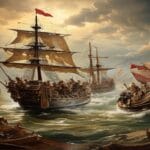
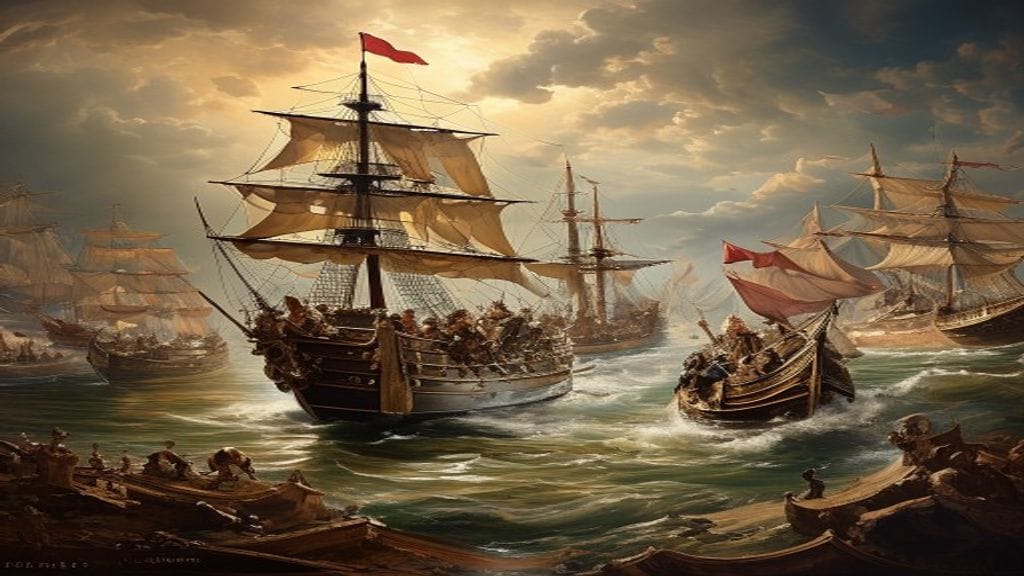
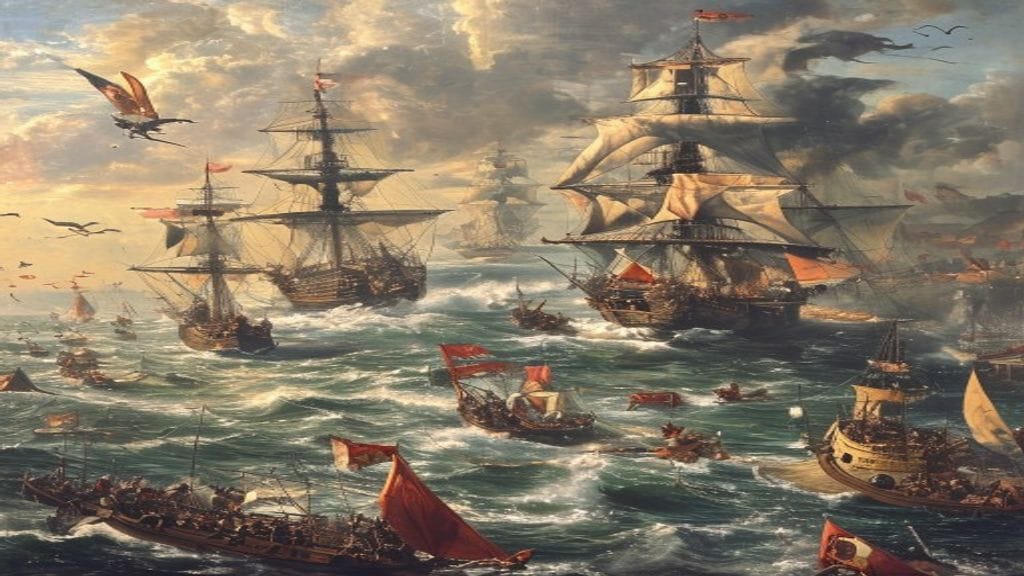
During the Battle of Preveza, Barbaros used narrow maneuvering spaces and positions close to the shore to neutralize the enemy’s numerical superiority. Ottoman galleys could move more flexibly than the large sailing ships, which were more dependent on wind. This advantage became decisive, especially when combined with favorable weather and sea conditions.
The Holy League fleet under Andrea Doria’s command consisted of ships from different states. Although this diversity appeared to be a strength at first glance, it weakened unity of command. The interests of the Venetian, Spanish, Papal, and Genoese elements did not always coincide. Barbaros, on the other hand, had a more centralized chain of command; he could make decisions quickly and direct the fleet toward a single objective.
Factors That Won the Battle
Several key factors stand out in the Ottoman victory at Preveza. The first is the galley-centered structure of the Ottoman fleet. Galleys, powered by oars, could move even in windless or variable weather conditions. This provided a great advantage in a geography like the Mediterranean, where coastal battles and sudden maneuvers were often decisive.
The second is Barbaros’s correct balancing of defense and offense. The Ottoman fleet did not act rashly in the face of the enemy’s size; it waited for the right position. Barbaros did not give the Holy League fleet the opportunity to deploy its full strength at once. As a result, its numerical superiority remained only on paper.
The third factor was the combat discipline aboard Ottoman ships. The marines (levent), gunners, and ship captains were accustomed to Mediterranean warfare. This human resource was shaped not only by orders from the center but also by years of maritime experience. Suraiya Faroqhi’s studies on Ottoman social and economic structure are significant in showing that the empire’s military strength rested on an extensive logistical and human resource network.
The fourth factor was Ottoman shipyard capacity. The Imperial Arsenal (Tersane-i Âmire) in Istanbul played a major role in sustaining the fleet. The construction and maintenance of ships, the supply of munitions, and personnel organization were all managed through this institution. In this respect, the success at Preveza must be explained not only by courage on the battlefield but also by the production and logistics system behind it.
- Unity of command: Barbaros’s decisions were swift and consistent.
- Geographic advantage: The waters off Preveza were well suited to Ottoman tactics.
- Galley superiority: Oar power increased maneuverability.
- Discord within the Holy League fleet: Differing political interests hindered joint action.
- Maritime experience: Ottoman marines were masters of Mediterranean naval warfare.
Ottoman Supremacy in the Mediterranean
After the victory at Preveza, the Ottoman state gained a safer and more effective range of movement in the Mediterranean. This supremacy was felt especially along the Eastern Mediterranean, the Aegean, the coasts of the Morea, and North Africa. The Ottoman fleet was no longer merely a force defending the coasts but became one of the main actors determining the balance of Mediterranean politics.
Caroline Finkel, in her account of Ottoman history, regards the 16th century as one of the periods in which the empire’s capacity approached its peak. The Battle of Preveza is the maritime symbol of this vast capacity. The campaigns conducted by the land army in Europe and Asia were complemented by the freedom of movement the navy secured in the Mediterranean.
This victory was also significant for trade routes. The Mediterranean was a region where trade in spices, grain, textiles, slaves, timber, and minerals was concentrated. Ottoman naval supremacy meant not only military prestige but also economic security. Ottoman economic policy and trade administration were directly linked to the security of maritime routes.
After Preveza, the prestige of the Ottoman fleet increased. European states realized they could not formulate Mediterranean policy without taking Ottoman naval power into account. This was especially decisive for trading republics like Venice. Ottoman presence in the Mediterranean also became a powerful bargaining chip at the diplomatic table.
The Political and Religious Meanings of the Victory
The Battle of Preveza gained significance in the Ottoman world not only as a military success but also as an act of protection over Islamic lands at sea. As Suleiman the Magnificent strengthened his claim to the caliphate and his leadership position in the Islamic world, the protection of Muslim coastlines in the Mediterranean also became an important element of legitimacy.
At this point, the leadership role of Ottoman sultans in the Islamic world merged with naval policy. Muslim communities in North Africa, facing pressure from Spain and its allies, viewed the Ottoman fleet as a protective power. Barbaros’s reputation, in this context, was not confined to his identity as Grand Admiral alone; he was also remembered as the defender of the Muslims of the Mediterranean.
On the other hand, the victory also revealed the limits of the idea of a Holy League in Europe. The political rivalries among states united by a shared religious discourse prevented the establishment of full unity on the battlefield. Andrea Doria’s cautious conduct, and the fact that Venetian and Spanish interests did not align at every point, produced results favorable to the Ottomans.
Preveza’s Place in Ottoman History
The Battle of Preveza and the Ottoman Rise
The Battle of Preveza is one of the most brilliant maritime symbols of the Ottoman rise. This victory shows that, after the conquest of Istanbul, the empire’s growth was not confined to land alone, but that naval dominance became an inseparable part of its political power. In this respect, the growing importance of the navy holds a special place among the characteristics of the Ottoman rise period.
One of the lasting effects of the victory is the prestige it created in the institutional memory of Ottoman seafaring. The name of Barbaros Hayreddin Pasha became synonymous with maritime ideals in the centuries that followed. Even though the Ottoman fleet weakened at times, Preveza continued to live on as a reminder of the power the state could achieve at sea.
Barbaros’s Legacy
Barbaros’s legacy should be sought not only in the battle he won but also in the strategic vision he brought to Ottoman seafaring. He viewed the Mediterranean not as a collection of disconnected coastlines, but as a unified sphere of power linked by its harbors, islands, straits, and trade routes. This vision is the foundation of the mindset that transformed the Ottoman fleet from a regional force into an imperial navy.
The assessments of Barbaros Hayreddin Pasha in the TDV Encyclopedia of Islam address his role in Ottoman naval policy from both military and administrative perspectives. Understanding Preveza therefore requires understanding not only the clash of 1538 but also the way Barbaros read the Mediterranean world.
Conclusion
The Battle of Preveza is a historic turning point that enabled the Ottoman state to establish military, political, and psychological supremacy in the Mediterranean. Barbaros Hayreddin Pasha’s strategic genius, the institutional strength of the Ottoman fleet, and the discord within the Holy League fleet combined to bring about this great victory.
Sources
- İsmail Hakkı Uzunçarşılı, Ottoman History.
- Halil İnalcık, The Ottoman Empire.
- Caroline Finkel, Osman’s Dream.
- Suraiya Faroqhi, The Ottoman Empire and the World Around It.
- TDV Encyclopedia of Islam, entry on Barbaros Hayreddin Pasha.