Studying the Ottoman sultans is essential to understanding both the empire’s development and its impact on world history. The Ottoman Empire was founded in 1299 by Osman Gazi and came to an end in 1922 with the abolition of the sultanate. Throughout this period, the Ottoman sultans shaped the direction of the state as both political and military leaders. Each sultan developed policies suited to the conditions of his era, altering the empire’s borders and influence.
Serving through the periods of foundation, rise, stagnation, decline, and dissolution, the Ottoman sultans embodied the spirit of their respective eras. While territorial gains were achieved rapidly during the foundation period, the empire became one of the most powerful states in the world during the rise period. Sultans such as Mehmed II (the Conqueror) and Suleiman I (the Magnificent) in particular carried the empire’s power to its peak.
During the periods of stagnation and decline, the Ottoman sultans struggled against difficulties both at home and abroad. The administrative changes seen in these periods occasionally shook the structure of the state. Nevertheless, each sultan applied different methods to ensure the continued survival of the empire.
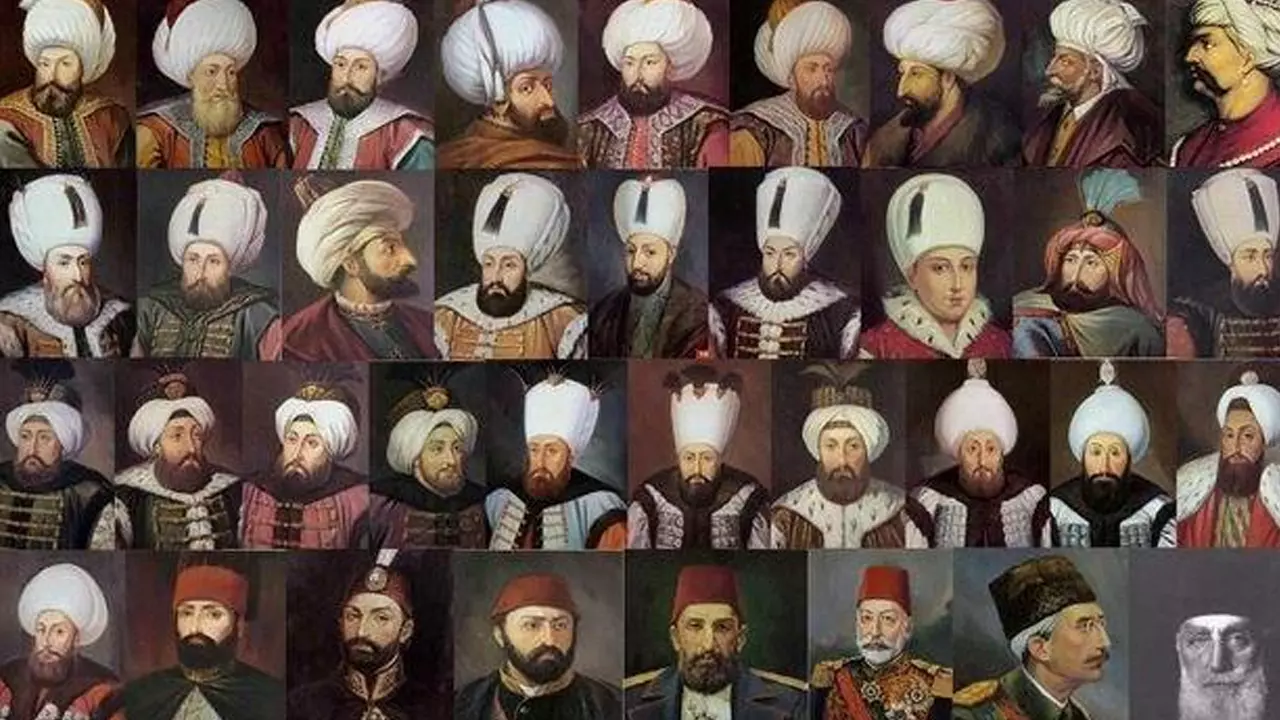
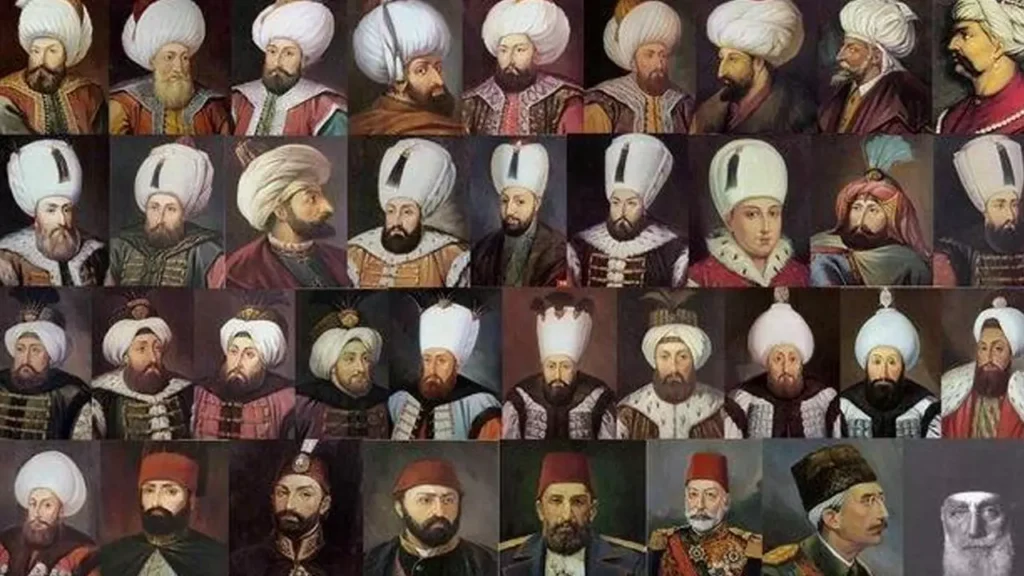
The last sultan, Mehmed VI Vahdettin, served during the empire’s final years. With the abolition of the sultanate, the era of the Ottoman sultans came to an end and the Republic of Turkey was established. At every stage of this long process, the decisions made by the sultans shaped the Ottoman Empire’s historical legacy. The Ottoman sultans, in order, are as follows:
- Osman I (Osman Gazi)
- Orhan I (Orhan Gazi)
- Murad I
- Bayezid I (Yıldırım/the Thunderbolt)
- Mehmed I (Çelebi)
- Murad II
- Mehmed II (the Conqueror)
- Bayezid II
- Selim I
- Suleiman I (the Magnificent)
- Selim II
- Murad III
- Mehmed III
- Ahmed I
- Mustafa I
- Osman II
- Murad IV
- Ibrahim I
- Mehmed IV
- Suleiman II
- Ahmed II
- Mustafa II
- Ahmed III
- Mahmud I
- Osman III
- Mustafa III
- Abdulhamid I
- Selim III
- Mustafa IV
- Mahmud II
- Abdulmejid I
- Abdulaziz
- Murad V
- Abdulhamid II
- Mehmed V Reşad
- Mehmed VI Vahdettin
Who Ended the Ottoman Empire?
The Ottoman Empire remained one of the world’s most important political powers for nearly six centuries. However, internal and external developments from the 19th century onward caused the Ottoman Empire to weaken. The Industrial Revolution, nationalist movements, and shifting political balances in Europe all had a negative impact on the Ottomans.
At the start of the century, the Ottoman Empire entered the First World War alongside the Central Powers. Losing the war paved the way for the occupation of Ottoman territory. During this process, resistance movements began in Anatolia, and the will of the people came to the forefront.
The fall of the Ottoman Empire cannot be attributed directly to a single person or institution. Political, military, and economic difficulties accumulated over time until the state’s structure eventually collapsed. The signing of the Armistice of Mudros, followed by the imposition of the Treaty of Sèvres, effectively sealed the fate of the Ottoman Empire.
Ultimately, the Ottoman Empire officially came to an end on 1 November 1922, when the Grand National Assembly of Turkey abolished the sultanate. This decision paved the way for the establishment of a new state structure based on national sovereignty. The last Ottoman sultan, Mehmed VI Vahdettin, left Istanbul and went abroad during this process.