The Battle of Ankara was fought on 28 July 1402 on the Çubuk Plain between the Ottoman sultan Bayezid I, known as Yıldırım (“the Thunderbolt”), and Timur. According to the TDV Encyclopedia of Islam, the Ottoman army broke up when some units belonging to the Anatolian beyliks went over to Timur’s side, and Bayezid was taken prisoner. The defeat dragged the state into the Interregnum, which would last more than a decade.
Quick Summary
- The battle was fought on 28 July 1402 on the Çubuk Plain.
- Tension escalated over the rulers who had taken refuge with Bayezid and over Mutahharten, the emir of Erzincan.
- Timur’s army numbered about 160,000 men and had more than thirty elephants.
- The Kara Tatars and some beylik troops, above all those of Germiyan, changed sides.
- Bayezid was taken prisoner and died in Akşehir on 8 March 1403.
Contents
- What was the battle?
- Who was Bayezid I?
- Who was Timur?
- Causes of the battle
- Sivas and the escalation of tension
- How did the armies reach the Çubuk Plain?
- Course of the battle
- Why did Bayezid lose?
- Results
- Frequently asked questions
What Was the Battle of Ankara?
The Battle of Ankara was the clash of two great rulers who both claimed dominion over Anatolia. According to the TDV Encyclopedia of Islam, it is one of the largest battles ever fought between two Muslim states in Turkish history. According to the sources, Timur’s army numbered 160,000 men. The Ottoman army, by contrast, numbered 70,000 according to Timur’s Fethname (proclamation of victory) and 90,000 according to the Ottoman chronicler Bihishti. The battle was decided in a single day and became one of the heaviest defeats in Ottoman history.
Who Was Bayezid I, the Thunderbolt?
Bayezid I came to the throne when his father, Murad I, fell as a martyr at the Battle of Kosovo in 1389. According to the TDV Encyclopedia of Islam, he earned the epithet Yıldırım (Thunderbolt) for the courage and dash he showed at the Battle of Frenk Yazısı. With his rapid campaigns he brought most of the Anatolian beyliks and much of the Balkans under his control.
According to the encyclopedia, Bayezid was born in 1354; he was the eldest son of Murad I, and his mother was Gülçiçek Hatun. Around 1381 he married Sultan Hatun, the daughter of the Germiyanid ruler Süleyman Çelebi. He became sanjak bey of the lands that were left to the Ottomans as her dowry. Later he also married Olivera, the sister of the Serbian prince Stefan Lazarević.
On 25 September 1396 he routed the crusader army led by King Sigismund of Hungary at Nicopolis. According to the encyclopedia, he had taken Tarnovo in 1393, and in the winter of 1393–1394 he gathered the Balkan princes at Serres in an effort to strengthen their loyalty. In the same years he kept Constantinople under pressure and had the fortress of Anadoluhisarı built. The Great Mosque (Ulu Cami) of Bursa is also his work. We explained how he built unity in Anatolia in our article on the first Ottoman sultan to achieve Anatolian Turkish political unity.
Who Was Timur?
According to the TDV Encyclopedia of Islam, Timur was born on 8 April 1336 in the village of Khoja Ilgar near Kesh. His father, Taraghai, was an emir of the Barlas tribe. After a ten-year struggle he took the throne in Samarkand on 9 April 1370. He is known as “Aksak” or “Lang” (the Lame), the origin of the European name Tamerlane, because he was wounded in the right arm and the right leg during these struggles.
According to the encyclopedia, Timur seized a fragmented Iran and in 1391 defeated Tokhtamysh, khan of the Golden Horde. He took Baghdad in 1399 and entered Syria in 1401. The encyclopedia notes that the most important reason for his success was the tribal rivalry in the region and the absence of any serious rival. In this way he became a neighbor of the Ottoman state in eastern Anatolia.
Causes of the Battle of Ankara
According to the TDV Encyclopedia of Islam, Timur, who had built an empire stretching as far as India, also wanted to add Anatolia to his field of conquest. This set him at odds with the Ottomans, who claimed the same lands. The death of the Mamluk sultan Barquq and the deterioration of Mamluk–Ottoman relations made Timur’s task easier.
According to the encyclopedia, when Timur took Baghdad in 1399, the Jalayirid ruler Sultan Ahmad and the Qara Qoyunlu chief Qara Yusuf took refuge with the Ottomans. Bayezid refused the demand to hand them over, and insulting letters passed between the two rulers. Relations grew even tenser when Mutahharten, the emir of Erzincan, who paid tribute to the Ottomans, submitted to Timur.
Timur also had with him Anatolian beys whose lands Bayezid had taken, and these beys kept inciting him against the Ottomans. According to the encyclopedia, on 13 March 1402 Timur sent an envoy from Tabriz. He demanded the return of Kemah, the restoration of the lands taken from the beyliks and the surrender of Qara Yusuf. Bayezid accepted none of these demands.
According to the encyclopedia, there was also an attempt at an agreement through Mutahharten’s mediation. But Timur, who insisted on the surrender of Qara Yusuf, would not come to terms. After the death of the Chinese emperor he was planning a campaign to the east, and he wanted to settle the Anatolian question first.
The Sivas Massacre and the Escalation of Tension
According to the TDV Encyclopedia of Islam, Timur had earlier besieged Sivas, which was defended by Malkoçoğlu Mustafa Bey. The city held out for eighteen days and surrendered on the promise that no one’s blood would be shed. Once inside, however, Timur had its defenders thrown into ditches and buried alive, and he burned and destroyed the city. He then took Malatya and set out on his Syrian campaign.
Because Bayezid was caught unprepared, he could not come to the aid of Sivas. According to the encyclopedia, while Timur was in Syria, Bayezid marched east to punish Mutahharten and took Erzincan and Kemah. This move broke relations between the two rulers completely.
How Did the Armies Reach the Çubuk Plain?
According to the encyclopedia, when Bayezid learned that Timur was on the move, he came to terms with the Byzantine emperor and lifted the siege of Constantinople. Since most of his army was infantry, he wanted to meet Timur in the mountainous country around Akdağmadeni and Kadışehri. Timur, however, who was following the movements of the Ottoman army through his spies, came by the Kayseri–Kırşehir road and laid siege to Ankara Castle.
Bayezid advanced in a rapid march by way of Kalecik and Ravlı and came down to the village of Melikşah on the Çubuk Plain by a route Timur had not expected at all. According to the encyclopedia, Timur was taken by surprise, but when Bayezid did not attack at once, he shifted his position overnight and set up a new front. Thus the stage was set for the great encounter.
28 July 1402: The Course of the Battle
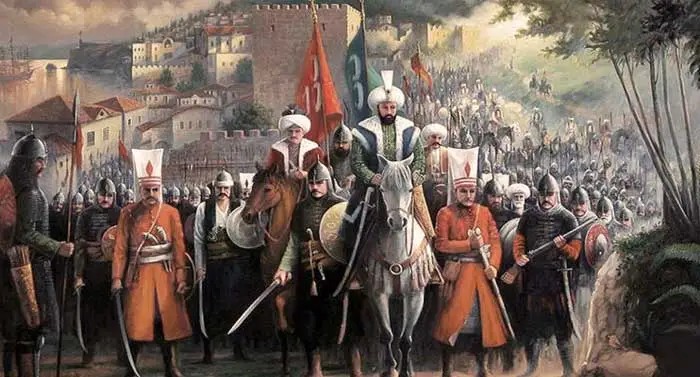
According to the TDV Encyclopedia of Islam, the battle was most probably fought on Friday, 28 July 1402. Timur’s army consisted mostly of cavalry and had more than thirty elephants. The Serbian ruler, for his part, fought in the Ottoman ranks with 20,000 men. The battle turned in favor of Timur, who through his spies had drawn the Kara Tatars in the Ottoman army over to his side.
According to the encyclopedia, the chronicler Neşri writes that some beylik forces, above all the Germiyan troops, went over to the side of their former beys, who had earlier taken refuge with Timur. Faced with this, the Ottoman army broke up. Bayezid, who kept on fighting with 3,000 men at his side, was finally taken prisoner.
Why Did Bayezid I Lose the Battle of Ankara?
- The Kara Tatars and some beylik units changed sides during the battle.
- Timur’s army had the advantage in numbers and was built around cavalry.
- Timur learned of the Ottoman army’s movements in advance through his spies.
- The Anatolian beys whose lands had been taken stood on Timur’s side.
- Bayezid did not attack at once when he first came face to face with Timur.
The most decisive of these was the disintegration of the units in the Ottoman army. According to the encyclopedia, in the winter of 1389–1390 Bayezid had brought the beyliks of Aydın, Saruhan, Menteşe, Hamid and Germiyan under Ottoman rule. When the soldiers of these recently annexed beyliks saw their former beys on the opposing side, they joined them. This showed that the rapidly growing state had not yet fully knit together.
Results of the Battle of Ankara
According to the encyclopedia, Bayezid died in captivity in Akşehir on 8 March 1403. After the Ottoman forces scattered, the whole of Anatolia was overrun by Timur’s emirs. Cities were plundered and the Anatolian beyliks were revived. Timur sent letters of victory to the kings of France and England, announcing that he had defeated the ruler whom they had been unable to defeat.
According to the TDV Encyclopedia of Islam’s entry on Timur, after the battle Timur went on to İzmir (Smyrna) by way of Kütahya, Denizli and Aydın. He took İzmir, which had been out of Turkish hands since the middle of the 14th century, and left it to the Aydınids. On 27 November 1404 Timur left Samarkand for a campaign in the east, and on 18 February 1405 he fell ill and died at Otrar. He had named his grandson Pir Muhammad as his heir.
According to the TDV Encyclopedia of Islam, this defeat shattered the Turkish unity in Anatolia that had been built through long struggles. Further conquests, including the conquest of Constantinople, were delayed by nearly half a century. The throne struggles that broke out among the princes led to the loss of many territories and to the shedding of brothers’ blood. We covered this period in our article What was the Ottoman Interregnum?
We discussed how the state recovered in How did Mehmed I reunite the state? For the military organization of the period, see also the first regular army in the Ottoman state.
Frequently Asked Questions
When and where was the Battle of Ankara fought?
It was fought on 28 July 1402 on the Çubuk Plain, northeast of Ankara Castle.
Who won the Battle of Ankara?
Timur won. Bayezid I was taken prisoner.
How did Bayezid I die?
He died in captivity in Akşehir on 8 March 1403.
What happened after the Battle of Ankara?
The Anatolian beyliks were re-established, and the throne struggles among the princes known as the Interregnum began.
Where does the epithet Yıldırım come from?
According to the TDV Encyclopedia of Islam, Bayezid earned this epithet, meaning “Thunderbolt”, for the courage and dash he showed at the Battle of Frenk Yazısı.
Conclusion
The Battle of Ankara grew out of the collision between Timur’s wish to bring Anatolia under his own rule and the rapid expansion of Bayezid I. The defection of the Kara Tatars and some beylik troops broke up the Ottoman army. Bayezid was taken prisoner, the unity of Anatolia was shattered and the state entered the Interregnum. Even so, the Ottomans recovered within a short time and began to rise once more.

1 thought on “Bayezid I and the Battle of Ankara”