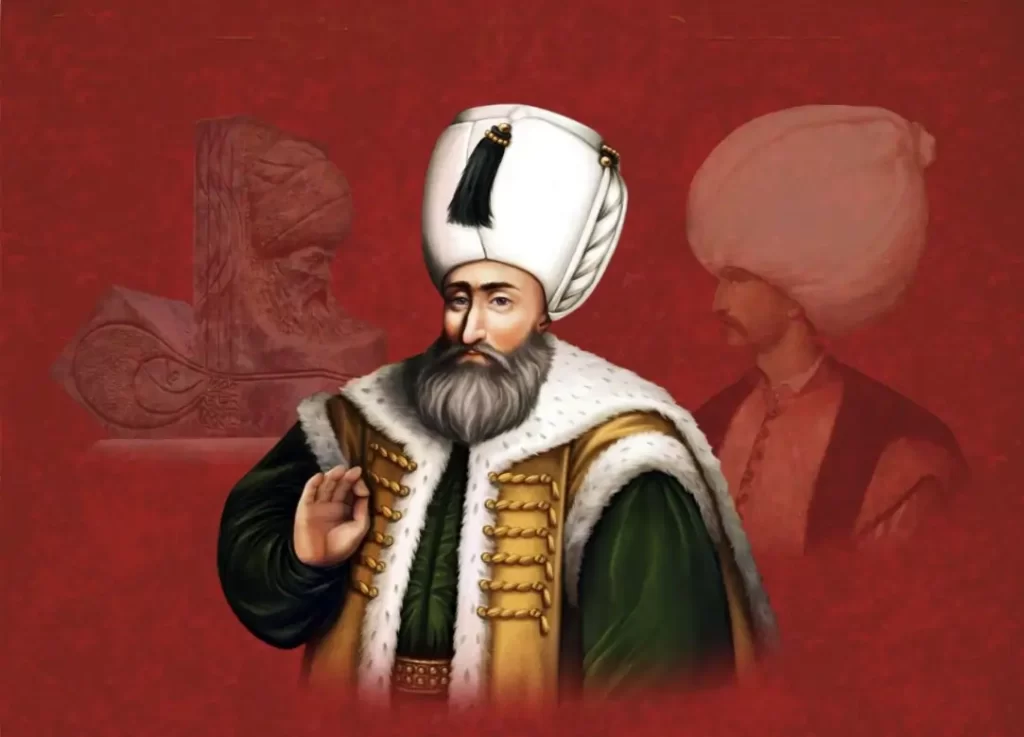
Suleiman the Magnificent’s last military campaign was the Szigetvár campaign of 1566. The sultan, by then over seventy, died in his tent on the night of 6–7 September 1566 while besieging the fortress of Szigetvár in Hungary. The fortress was taken immediately after his death. The grand vizier Sokullu Mehmed Pasha concealed the sultan’s death from the army until the new sultan, Selim II, arrived.
Quick Summary
- Suleiman the Magnificent’s last military campaign was the Szigetvár campaign, his thirteenth major campaign.
- The sultan left Istanbul on 1 May 1566 and reached Belgrade in about fifty days.
- The fortress was defended by the commander Nikola Zrinski, of Croatian origin.
- The death came in the last days of the siege, on the night of 6–7 September 1566.
- The news of the death was officially announced when Selim II arrived in Belgrade.
- After the funeral prayer at the Süleymaniye on 23 November 1566, the body was buried in his tomb.
Contents
- Which was the last campaign?
- The reasons for the campaign
- From Istanbul to Szigetvár
- The siege of Szigetvár
- The role of Sokullu Mehmed Pasha
- The death of the sultan
- The concealment of the death
- The accession of Selim II
- The tomb at Szigetvár
- Other major campaigns
- Frequently asked questions
What Was Suleiman the Magnificent’s Last Military Campaign?
Suleiman the Magnificent’s last military campaign was the Szigetvár campaign of 1566, waged against the Habsburgs. According to the TDV Encyclopedia of Islam, the targets of the campaign were the fortresses of Szigetvár and Eger. A strong warning was also to be given to the emperor. The sultan lost his life during this campaign and joined the ranks of the sultans who died on the battlefield.
According to the encyclopedia, with a reign of forty-six years, Suleiman was the sultan who stayed on the throne the longest. During this time he set out on thirteen major campaigns. Szigetvár was the last of them. We explained in our article on why Suleiman was called the Magnificent how he earned that name. We described the overall picture of the period in our article on the Ottoman Empire under Suleiman the Magnificent.
The Reasons for the Campaign
Suleiman’s last military campaign came after a heavy defeat. According to the TDV Encyclopedia of Islam, the failure of the siege of Malta in 1565 had badly shaken the state’s prestige in the West. The gloomy atmosphere of the struggle for the throne among the princes had combined with this defeat. We discussed the beginning of this struggle in our article on Prince Mustafa. The sultan wanted to show that power was still in his hands.
According to the encyclopedia, emphasis is placed on the influence of his daughter Mihrimah Sultan and the grand vizier Sokullu Mehmed Pasha on this decision. The agreement made with the Habsburgs in 1562 had renewed old commitments but had not resolved the disorder along the frontier. Clashes on the Hungarian frontier made a new campaign unavoidable. We introduced Mihrimah Sultan’s mother in our article on Hürrem Sultan.
The siege of Malta began in May 1565 and lasted about four months. The Ottoman army and navy could not break the defense of the Knights of St John. The siege was lifted in September 1565. This failure also showed the limits of expansion in the Mediterranean.
From Istanbul to Szigetvár
When the campaign began, the sultan was over seventy and in poor health. According to the TDV Encyclopedia of Islam, before setting out he went to the tomb of Eyüp Sultan and prayed. On a day when he felt well, 1 May 1566, he left Istanbul on horseback amid great ceremony. He would never see the city again.
According to the encyclopedia, the army reached Edirne on 15 May. On the way the sultan received the news of the birth of Mehmed, the son of his grandson, and named the child himself. The army was able to reach Belgrade only on the fiftieth day after setting out. At Zemun, John Sigismund (János Zsigmond), the king of Transylvania and a vassal of the Ottomans, came before the sultan. According to the encyclopedia, the sultan received the king, who declared his loyalty, very warmly.
The Siege of Szigetvár
Szigetvár was a strong fortress surrounded by marshes in the south of present-day Hungary. It was defended by the commander Nikola Zrinski, of Croatian origin. According to the TDV Encyclopedia of Islam, the sultan’s tent was pitched on a hill north of the town that commanded the siege. Despite his illness, the sultan followed the siege closely. According to the encyclopedia’s entry “Sokullu Mehmed Paşa,” the siege began on 7 August 1566.
The siege lasted throughout August, and both sides suffered heavy losses. After capturing the outer walls and the town, the Ottoman army pressed on against the inner citadel. The fortress fell on 8 September 1566. Zrinski died fighting together with his soldiers in his final sortie. On another front of the campaign, Pertev Pasha took the fortress of Gyula.
The Role of Sokullu Mehmed Pasha
Suleiman’s last military campaign was also one of the hardest tests for Sokullu Mehmed Pasha. According to the TDV Encyclopedia of Islam, Sokullu had become grand vizier on 29 June 1565, upon the death of Semiz Ali Pasha. At that time the siege of Malta was still going on. According to the encyclopedia, because of the sultan’s illness, the entire responsibility for the siege of Szigetvár fell on him.
Sokullu spent many nights in the trenches together with the soldiers. According to the encyclopedia, he served as grand vizier to three sultans, and for this reason many legends arose about him. He died as the result of an assassination on 12 October 1579.
The Death of the Sultan
Suleiman’s last military campaign was also the end of his life. According to the TDV Encyclopedia of Islam, the sultan passed away on the battlefield on the night of 6–7 September 1566. He did not live to see the fortress taken. The encyclopedia describes this as a death on the battlefield “befitting his glory.”
The exact cause of death is not clearly stated in the sources. It is known that the sultan had long suffered from gout and other ailments. Old age and the harsh conditions of the campaign had badly damaged his health. According to the encyclopedia, this long reign came to an end on the battlefield, as befitted thirteen major campaigns.
The Concealment of the Death
The sultan’s death was concealed with great skill to prevent the army from breaking up. According to the TDV Encyclopedia of Islam, one of the few people who knew of the death was Feridun Bey. According to Feridun Bey, the sultan’s body was embalmed and temporarily buried in a coffin beneath the throne. The army continued its campaign as if the sultan were alive.
According to the encyclopedia, after the fortress fell, the army began its return. The body, which had been buried for forty-two days, was secretly placed in a carriage. All along the way, everyone acted as if the sultan were alive. Sokullu Mehmed Pasha quickly sent word to Prince Selim in Kütahya.
According to the encyclopedia, the news of the death was officially announced when the new sultan, Selim II, arrived in Belgrade. The body was brought to Istanbul and, on 23 November, after the funeral prayer led by the şeyhülislam Ebussuud Efendi at the Süleymaniye Mosque, was buried in his tomb.
The Accession of Selim II
Prince Selim had been sancakbeyi (district governor) in Kütahya since 1562. According to the TDV Encyclopedia of Islam, after receiving the news of his father’s death from Sokullu, he set out quickly. Because the treasury had not been opened, he borrowed 50,000 gold coins from his sister Mihrimah Sultan. Although he came as far as Vukovar, he returned to Belgrade upon a letter from Sokullu.
According to the encyclopedia, Sokullu feared that if the new sultan came to the army, the soldiers would immediately demand the accession bonus. On 21 October the army set out from Szigetvár toward Belgrade. The news of the death was officially announced on 24–25 October. The soldiers were promised a bonus, but the Janissaries, not content with what was given, reacted. According to the encyclopedia, they also attacked the Anatolian troops who had come with the sultan.
The Tomb at Szigetvár
The sultan’s internal organs were buried near the place where he died. A tomb was later built there. Over time the building was destroyed, and its location was long a matter of debate. In excavations carried out in 2015–2016, the remains of the tomb were uncovered. In this way the place that symbolizes the end of an era was identified once again.
What Were Suleiman’s Other Major Campaigns?
To understand Szigetvár, the last military campaign of the sultan, better, we need to look at his earlier campaigns. The main ones are summarized in the table below.
| Year | Campaign | Result |
|---|---|---|
| 1521 | Belgrade campaign | Belgrade taken |
| 1522 | Rhodes campaign | Rhodes taken |
| 1526 | Mohács campaign | Hungarian army defeated |
| 1529 | Vienna campaign | Siege lifted |
| 1533–1536 | Campaign of the Two Iraqs | Tabriz and Baghdad taken |
| 1553–1555 | Nakhchivan campaign | Treaty of Amasya signed |
| 1566 | Szigetvár campaign | Fortress taken, sultan died |
Frequently Asked Questions
What was Suleiman the Magnificent’s last military campaign?
It was the Szigetvár campaign of 1566. The sultan died during this campaign, while the fortress of Szigetvár was under siege.
When did Suleiman the Magnificent’s last military campaign begin?
The sultan left Istanbul on 1 May 1566. The army reached Belgrade in about fifty days. The siege began in early August.
When was the fortress of Szigetvár taken?
The fortress was taken on 8 September 1566, shortly after the sultan’s death. Nikola Zrinski, who defended it, died in his final sortie.
Where did Suleiman the Magnificent die?
He died in his tent before the fortress of Szigetvár in Hungary, during the siege. His death came on the night of 6–7 September 1566.
Why was Suleiman’s death concealed?
It was concealed to keep the army’s morale from collapsing and to prevent military disorder. While the campaign was still under way, the enemy was also not to be allowed to take advantage of the situation. The news was announced when the new sultan, Selim II, arrived in Belgrade.
Conclusion
Szigetvár, Suleiman the Magnificent’s last military campaign, was the final link of a forty-six-year reign. To erase the marks left by the defeat at Malta, the sultan set out on campaign old and ill. The fortress of Szigetvár was taken, but the sultan died before he could see the victory. Thanks to Sokullu’s skillful concealment of the death, the change of ruler took place without trouble. Szigetvár is therefore remembered as the close of an era.
Sources
- TDV Encyclopedia of Islam, entry “Süleyman I”
- TDV Encyclopedia of Islam, entry “Sokullu Mehmed Paşa”
- TDV Encyclopedia of Islam, entry “Selim II”
- TDV Encyclopedia of Islam, entry “Zigetvar” (Szigetvár)
- Feridun Ahmed Bey, Nüzhetü’l-esrâri’l-ahbâr der-sefer-i Sigetvar (an account of the Szigetvár campaign).