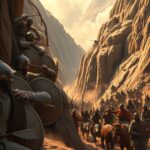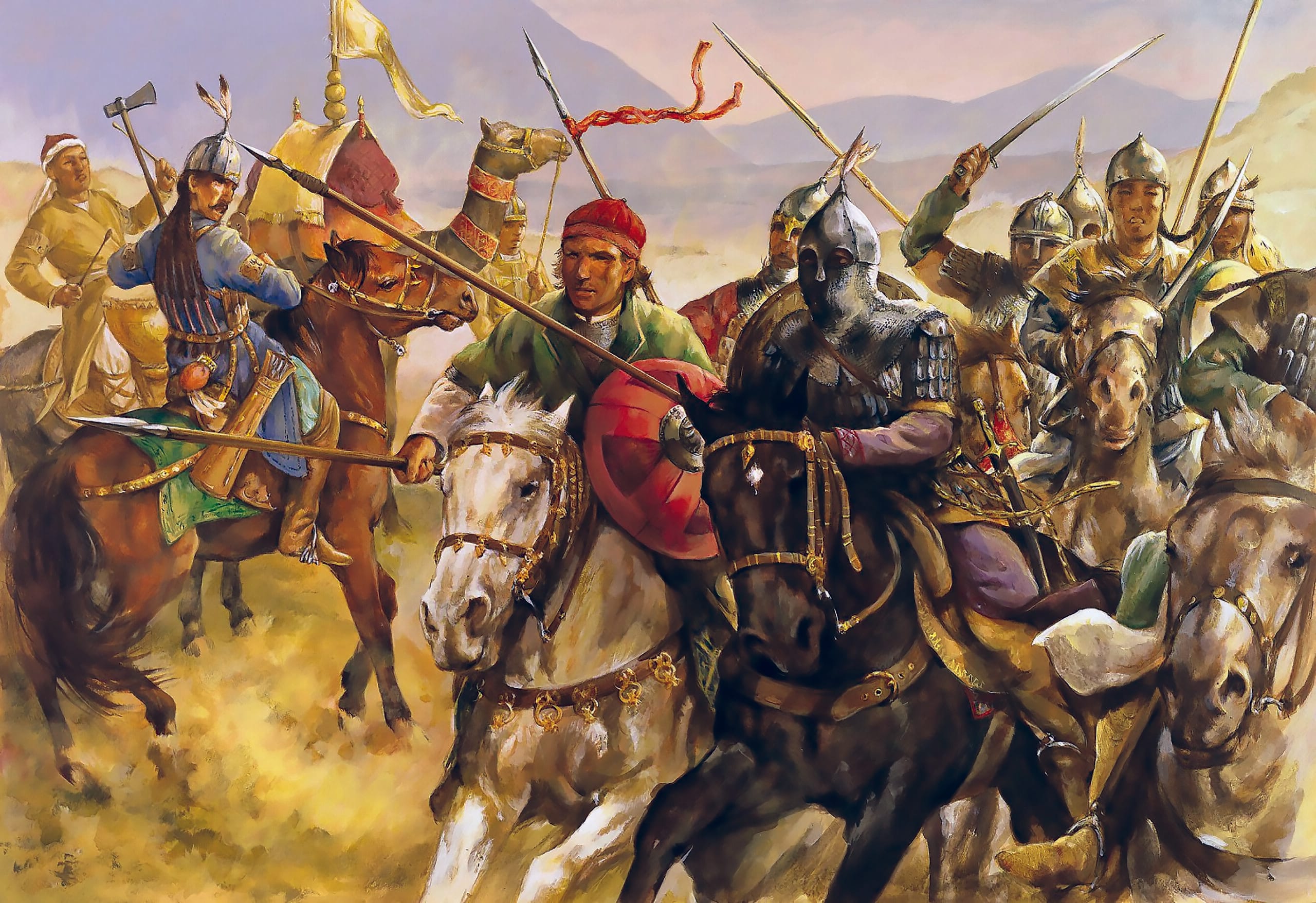
The Seljuk wars are the wars that the great state founded in Khurasan and the sultanate in Anatolia fought against the Ghaznavids, Byzantium, the Crusaders and the Mongols. The most important of them are the battles of Dandanaqan (1040), Pasinler (1048), Manzikert (1071), Myriokephalon (1176) and Köse Dağ (1243). These wars played a decisive role in Anatolia becoming a Turkish homeland.
Quick Summary
- The Seljuk wars took place in two separate eras: the great state centred on Khurasan and the Anatolian sultanate.
- With the victory at Dandanaqan (23 May 1040), Tughril Beg became the first ruler of the state.
- Alp Arslan defeated the Byzantine army at Manzikert on 26 August 1071.
- Kilij Arslan II’s victory at Myriokephalon in 1176 ended Byzantium’s hope of recovering Anatolia.
- The defeat at Köse Dağ (1243) brought Anatolia under Mongol domination.
Contents
- The wars and their dates
- The Battle of Dandanaqan
- The Battle of Pasinler
- The Battle of Manzikert
- Wars with the Crusaders
- Qatwan and the defeat by the Oghuz
- The Battle of Myriokephalon
- Yassıçemen and Köse Dağ
- How the army fought
- The results of the wars
- Frequently asked questions
What Were the Seljuk Wars?
The Seljuk wars span a period of more than two centuries. The first wars were fought against the Ghaznavids in Khurasan. Then raids and pitched battles against Byzantium began in Eastern Anatolia. The sultanate in Anatolia, for its part, fought the Crusaders, Byzantium and finally the Mongols. The main wars are summarized in the table below.
| Battle | Year | Sides | Result |
|---|---|---|---|
| Dandanaqan | 1040 | Tughril and Chaghri Beg – Mas’ud of Ghazna | The state was founded |
| Pasinler | 1048 | Ibrahim Inal – Byzantium | Byzantium defeated |
| Manzikert | 1071 | Alp Arslan – Romanos Diogenes | The gates of Anatolia opened |
| Eskişehir | 1097 | Kilij Arslan I – the Crusaders | Capital moved to Konya |
| Qatwan | 1141 | Sultan Sanjar – the Qara Khitai | Transoxiana lost |
| Myriokephalon | 1176 | Kilij Arslan II – Manuel Komnenos | Byzantium’s hope ended |
| Yassıçemen | 1230 | Kayqubad I – Jalal al-Din Khwarazmshah | The eastern border secured |
| Köse Dağ | 1243 | Kaykhusraw II – the Mongols | Mongol domination began |
The Battle of Dandanaqan (1040)
The Turkmens had won two victories against the Ghaznavid state in Khurasan, in 1035 and 1038. According to the TDV Encyclopedia of Islam, the Ghaznavid Sultan Mas’ud set out with an army of 50,000 that included war elephants. The Turkmen army numbered about 20,000. Having withdrawn at the first encounter, the Turkmens wore down the Ghaznavid army with raids from the desert and blocked the wells.
The two armies finally met before the fortress of Dandanaqan near Merv. According to the encyclopedia, a group from the Ghaznavid household troops going over to the Turkmens changed the course of the battle. The battle, which lasted three days, ended in a decisive victory on 23 May 1040. Sultan Mas’ud escaped with a retinue of only a hundred men. Tughril Beg took the throne and was hailed as emir of Khurasan.
According to the encyclopedia, after the victory at Dandanaqan Tughril Beg became the first ruler of the state. Chaghri Beg stayed in Merv, Tughril Beg went to Nishapur and their uncle Musa Yabghu to Herat. We discussed the Ghaznavid state order in our article on the title of viziers among the Ghaznavids.
The Battle of Pasinler (1048)
Turkmen raids on the Byzantine frontier intensified after the 1040s. According to the TDV Encyclopedia of Islam, Hasan, the son of Musa Yabghu, was ambushed and killed on the Byzantine frontier in 1047. The following year Tughril Beg’s brother Ibrahim Inal defeated the Byzantine army on the plain of Pasinler. This victory is regarded as the first great pitched battle fought against Byzantium.
According to the encyclopedia, in 1054 Tughril Beg also besieged the fortress of Manzikert, but turned back as winter approached. During this campaign the raiders reached as far as Trabzon via Bayburt. In 1055 Tughril Beg entered Baghdad at the invitation of the Abbasid caliph.
The Battle of Manzikert (1071)
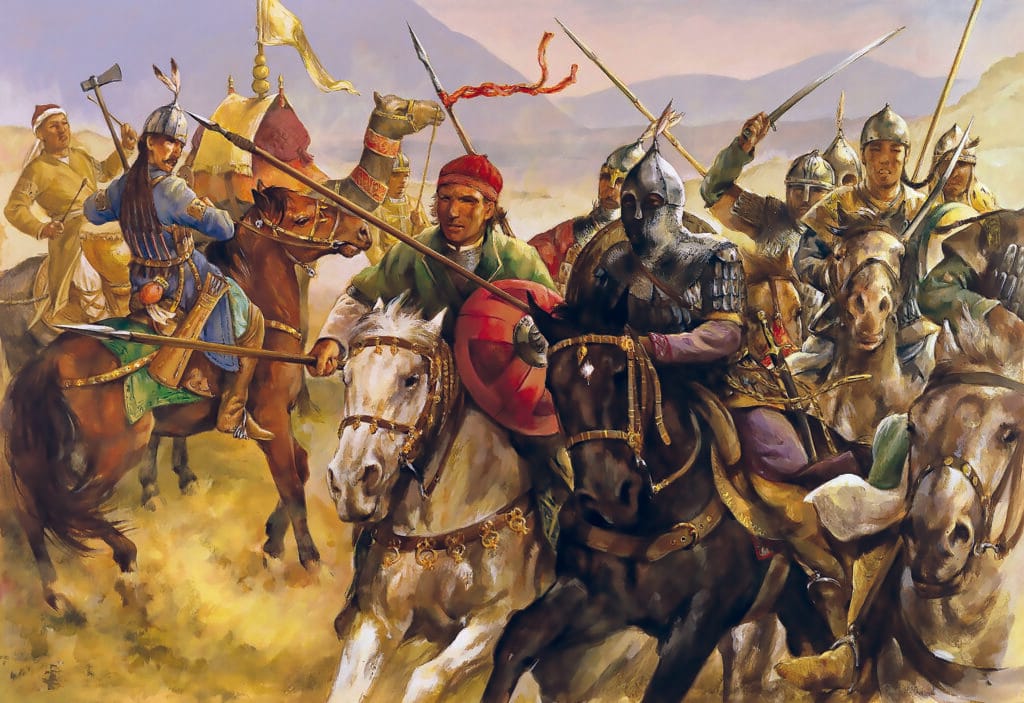
The best known of the Seljuk wars is Manzikert. According to the TDV Encyclopedia of Islam, while advancing from Aleppo towards Egypt, Alp Arslan learned that the Byzantine Emperor Romanos Diogenes had set out on campaign with a large army. The two rulers met on the plain of Manzikert on 26 August 1071. Alp Arslan inflicted a heavy defeat on the Byzantine army.
The emperor was taken prisoner but was released after an agreement. According to the encyclopedia, the victory at Manzikert brought about the Turkish conquest of Anatolia, which became the homeland of the Oghuz. Romanos Diogenes’ army also included mercenaries of Turkic origin such as Pechenegs and Uz. Some of these units went over to Alp Arslan’s side during the battle. We described the background of the battle in our article on the causes of the Battle of Manzikert.
Wars with the Crusaders
At the end of the 11th century the Seljuk wars met a new rival: the Crusaders. According to the TDV Encyclopedia of Islam, Kilij Arslan I lost Nicaea in June 1097. The battle fought near Eskişehir in July 1097 also ended in defeat. Kilij Arslan then made Konya the centre of the state.
According to the encyclopedia, the German army that joined the Second Crusade in 1147 suffered a heavy defeat in the Eskişehir region. The French army, too, suffered heavy losses from Turkish attacks while marching from Western Anatolia to Antalya. These successes showed that crossing Central Anatolia was very difficult for the Crusaders. According to the encyclopedia, the armies of the First Crusade also defeated Kerbogha before Antioch in 1098 and took Jerusalem in 1099.
Qatwan and the Defeat by the Oghuz
In the 12th century the great state in Khurasan had to deal with dangers coming from the east. Sultan Sanjar was defeated by the Qara Khitai at the Battle of Qatwan in 1141 and lost Transoxiana. This defeat seriously shook the state’s power on its eastern frontier. According to the TDV Encyclopedia of Islam, in April 1153 Sanjar was defeated while fighting his own kinsmen, the Oghuz, and remained a captive for three years. According to the encyclopedia, with his death in 1157 the great state left the stage of history.
We discussed the internal struggles of this period and the time after Malik-Shah in our article Who killed Malik-Shah? We described the wars of the great state in detail in our article on the wars of the Great Seljuks.
The Battle of Myriokephalon (1176)
The Byzantine Emperor Manuel I Komnenos asked Kilij Arslan II to return certain territories. According to the TDV Encyclopedia of Islam, when the sultan did not meet these demands, the emperor marched on Konya with a large army. On 17 September 1176 the Byzantine army suffered a heavy defeat at a place called Myriokephalon. The sultan accepted the emperor’s request for peace.
According to the encyclopedia, the most important result of this victory was that Byzantium lost its military strength and its hope of recovering Anatolia. Myriokephalon is regarded as a turning point in the Turkification of Anatolia. If, among the Seljuk wars, Manzikert opened the door, Myriokephalon made this gain permanent.
Yassıçemen and Köse Dağ
In 1230 Ala al-Din Kayqubad I defeated Jalal al-Din Khwarazmshah at Yassıçemen near Erzincan. This victory secured the eastern border, but it also removed the last buffer power between the Mongols and Anatolia. According to the encyclopedia, by this time the Mongols had reached the borders of Anatolia.
According to the TDV Encyclopedia of Islam, the Babai revolt of 1240 shook the strength of the army. The Mongol commander Baiju Noyan captured Erzurum at the end of 1242. According to the encyclopedia, the Battle of Köse Dağ was fought, depending on the source, on 1 or 3 July 1243. The army of Ghiyath al-Din Kaykhusraw II began to break up in the first minutes of the battle.
After the defeat, the Anatolian sultanate agreed to pay the Mongols an annual tribute. According to the encyclopedia, the state never recovered and in time came under Mongol domination. In this climate the beyliks grew stronger in Anatolia. The Ottoman beylik also emerged in this process. We described the founding period in our article on Osman Gazi.
How the Army Fought
The Seljuk wars reflect the way of war of the Turkish mounted archers. The core of the army consisted of fast-moving cavalry. The best-known tactic was to lure the enemy into a trap with a feigned retreat. This tactic is called the “Turan tactic”.
A large part of the army was maintained through the iqta system. In this system, soldiers received the revenue of certain lands instead of a salary. Around the sultan there was a salaried, standing guard unit. Besides the Turkmen tribes, the army also included mercenaries of various origins.
The Results of the Wars
The most lasting result of these wars was the Turkification of Anatolia. After Manzikert, Turkmen tribes settled in Anatolia, and cities and caravanserais were founded. The successes against the Crusaders contributed to the defence of the Islamic world. Although the Mongol invasion broke political unity, it did not change the presence of the Turkish population in Anatolia.
Frequently Asked Questions
What were the Seljuk wars?
The main ones were the battles of Dandanaqan (1040), Pasinler (1048), Manzikert (1071), Eskişehir (1097), Qatwan (1141), Myriokephalon (1176), Yassıçemen (1230) and Köse Dağ (1243).
Which of the Seljuk wars opened the door to Anatolia?
The Battle of Manzikert. Alp Arslan’s victory on 26 August 1071 opened the way for the Turks to settle in Anatolia.
What was the significance of the Battle of Dandanaqan?
With this victory over the Ghaznavids the great state in Khurasan was officially founded, and Tughril Beg became its first ruler. The battle was fought near Merv and lasted three days.
Why is the Battle of Köse Dağ important?
With this defeat the Anatolian sultanate became subject to the Mongols. According to the encyclopedia, the state agreed to pay an annual tribute. Central authority weakened, and the age of the beyliks began.
Conclusion
The Seljuk wars are the story of the Turks’ journey from Khurasan to Anatolia. Dandanaqan founded a state, and Manzikert opened the gates of Anatolia. Myriokephalon made this gain permanent. The defeat at Köse Dağ, in turn, prepared the end of the sultanate and began the age of the beyliks. Each of them was a turning point that changed the course of Turkish history.
Sources
- TDV Encyclopedia of Islam, entry “Selçuklular” (Seljuks)
- TDV Encyclopedia of Islam, entry “Dandanakan Savaşı” (Battle of Dandanaqan)
- TDV Encyclopedia of Islam, entry “Miryokefalon Savaşı” (Battle of Myriokephalon)
- TDV Encyclopedia of Islam, entry “Kösedağ Savaşı” (Battle of Köse Dağ)
- Ali Sevim – Yaşar Yücel, Türkiye Tarihi I [History of Turkey I].