The most striking link between Alexander the Great and the Ottoman sultans is that Alexander lived on in this culture as a model of the ruler. According to the TDV Encyclopedia of Islam, Ahmedi wrote the first verse Iskendername (Book of Alexander) in Turkish literature in 1390. The work contains a section counted among the first verse histories of the dynasty. Mehmed the Conqueror’s idea of world dominion strengthened these comparisons further.
Quick Summary
- Alexander was born in 356 BC and in twelve years built an empire stretching from Egypt to the Indus.
- In Islamic sources Alexander was identified with Dhu al-Qarnayn of the Quran.
- Ahmedi’s Iskendername contains one of the first verse sections devoted to the history of the dynasty.
- Mehmed the Conqueror’s idea of world dominion drew on Turco-Mongol, Islamic and Roman traditions.
- The greatest difference is the short life of Alexander’s empire and the centuries-long life of the sultans’ state.
Contents
- Who was Alexander the Great?
- Alexander in the Islamic world
- Ahmedi’s Iskendername
- Mehmed II and world dominion
- Military parallels
- A difference in government
- Similarities and differences
- Frequently asked questions
Who Was Alexander the Great?
According to the TDV Encyclopedia of Islam, Alexander was born in 356 BC in the town of Pella in Macedonia. His real name was Alexandros; he was the son of King Philip II of Macedon and Princess Olympias of Epirus. For three years he studied language, literature, politics and philosophy with Aristotle. When his father was assassinated in 336, he was proclaimed king.
According to the encyclopedia, in the spring of 334 he set out on his Asian campaign with a group of advisers made up of architects, engineers, historians and scholars. He defeated the Persian armies for the first time at the Granicus, that is, the Biga Çayı. In 333 he routed the Persian king Darius III at Issus, and in 332 he took Egypt; because he treated the people and their religious values with respect, the high priest gave him the title of son of Ammon. According to the encyclopedia, the largest of the sixteen cities he founded and named after himself is Alexandria. In 331 he defeated Darius again at Gaugamela, and then captured Babylon and Persepolis.
According to the encyclopedia, in 326 he entered Taxila on the Indus and defeated the Indian ruler Porus. Unrest in the army forced him to turn back at the Beas River. He had about 1,000 ships built at a shipyard on the banks of the Hydaspes. On his return he was struck by a fever after a drinking party in Babylon and died ten days later. In this way he had built a great empire in the short span of twelve years.
According to the encyclopedia, although he was a great commander, he is also known as cruel because of his fondness for drink and his volatile character. When he set out to deify himself, he had Callisthenes, who objected, hanged. He also had Parmenion, his most successful general, killed. His body was taken to Alexandria and placed in a golden coffin.
Alexander the Great and Dhu al-Qarnayn in the Islamic World
According to the TDV Encyclopedia of Islam, Alexander’s dazzling victories became a source of inspiration for the statesmen and artists who came after him. Some thought that victories on such a scale could only have been won with divine support. For this reason they took him to be the same person as Dhu al-Qarnayn, whose story is told in the Quran. According to the encyclopedia, although Islamic sources give accurate information about his campaigns, the reports about his family and character rest mostly on legend.
Dhu al-Qarnayn means “the two-horned one”, and the Quran tells how he built a barrier against Gog and Magog. According to the encyclopedia, some Persian traditions presented Alexander as the son not of Philip but of the Persian ruler Dara I. This legend aimed to soothe the wounded national pride of ancient Iran.
According to the encyclopedia, in the Iskendername genre Alexander took on the identity of Dhu al-Qarnayn almost entirely. In these works he was portrayed as a ruler who spread the belief in the oneness of God. In this way an ancient conqueror became a moral example for Muslim rulers. Works of this kind were written in many languages, including Arabic, Persian and Turkish.
Ahmedi’s Iskendername and Ottoman History
The real historical link between the two sides was forged through literature. According to the TDV Encyclopedia of Islam, Ahmedi wrote the first verse Iskendername in Turkish literature in 1390. Ahmedi did not translate the works of Ferdowsi and Nizami; he drew on them to produce an original work. Half of its couplets are devoted to informing the reader on subjects such as politics, ethics, medicine and astronomy. Ahmedi kept adding to the work until the end of his life; the difference between the first and the expanded copies comes to nearly 2,000 couplets.
According to the encyclopedia, the work contains sections narrating history from the Prophet onward, through the Umayyads, the Abbasids and the Ilkhanids to the House of Osman. The section titled “Dastan-ı Tevarih-i Müluk-i Al-i Osman”, which comes down to Bayezid I, is counted among the first Ottoman chronicles. The advice given to rulers ties the work to the tradition of mirrors for princes that goes back to the Kutadgu Bilig. The Iskendername was presented to Bayezid’s son Emir Süleyman, and more than a hundred copies of it are known.
Mehmed the Conqueror and the Idea of World Dominion
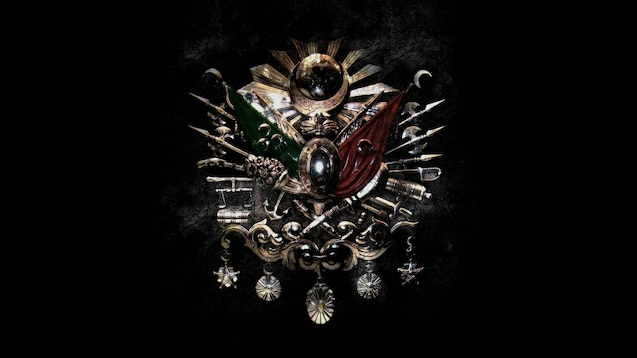
The Ottoman sultan most often compared with Alexander is Mehmed the Conqueror. According to the TDV Encyclopedia of Islam, Mehmed II had embraced the idea of world dominion. The sources of this idea were the Turco-Mongol tradition of the khaganate, the Islamic caliphate and the idea of the Roman Empire. According to the encyclopedia, he tried to grasp this tradition by having his Italian companions read Roman histories to him.
According to the encyclopedia, the Byzantine historian Kritovoulos also wrote his work in these years. In describing the sultan’s campaigns, Kritovoulos uses language that compares him with the great conquerors of antiquity. The conquest of Constantinople also gave the sultan a claim to be the heir of Eastern Rome. According to the encyclopedia, Greek scholars such as Amiroutzes of Trebizond and George of Trebizond were also in his circle in these years.
Military Parallels with Alexander the Great
There are also some military similarities between the two sides. Alexander took engineers and scholars on his campaigns; the sultans’ armies likewise relied on cannon founders and engineers in their sieges. Both powers reached vast territories with fast and well-organized armies. The conquests of the Ottoman state, however, were the product not of a single ruler but of a state policy that lasted for generations. Conquered lands were turned into provinces where lasting systems of administration and taxation were set up.
Geography, too, offers an interesting link. The Biga Çayı, where Alexander won his first victory in Asia, lies near Biga, which centuries later was made a frontier base for the crossing into Rumelia. According to the TDV Encyclopedia of Islam’s entry on Orhan, Biga was made a frontier base after the annexation of Karesi. We described this period in our article on Ottoman expansion in the era of Orhan Gazi.
A Difference in Government: A Short-Lived Empire and an Enduring State
According to the TDV Encyclopedia of Islam, Alexander envisaged an empire centered on Iran and set up an eclectic system combining Macedonian and Persian styles of government. At Susa he encouraged fusion by marrying 10,000 of his officers and soldiers to Iranian women. After a mutiny at Opis he disbanded the whole army and formed a new one from Persians. According to the encyclopedia, however, his effort to create a cosmopolitan race and culture did not achieve its goal. After his death his empire was divided among his commanders.
The Ottoman state, by contrast, built institutions that lasted for centuries. Institutions such as the imperial council, the law codes, the timar system and the devshirme kept the state standing independently of the person of the ruler. Even when the ruler changed, these institutions ensured the continuity of the state. We discussed the sultans’ approach to government in our article on the Ottoman sultans and state administration.
According to the encyclopedia, Alexander could not build a civilization in his short reign, but thanks to the scientists and artists he took with him he contributed to the development of the natural sciences. His conquests also increased social and commercial relations between East and West. The sultans, for their part, kept different cultures living under the same political roof for centuries.
Similarities and Differences
- Similarity: Both ruled vast territories reaching Anatolia, the Balkans and the Middle East.
- Similarity: In both cases the ideal of world dominion was a strong political motive.
- Difference: Alexander’s empire broke apart after his death, while the sultans’ state lasted nearly six centuries.
- Difference: Alexander’s empire rested on the genius of a single ruler, while the sultans’ order rested on institutions.
- Difference: Alexander’s campaigns targeted the Persian Empire, while the sultans’ conquests began in Byzantine lands and the Balkans.
- Link: The Iskendernames made Alexander a model for Turkish rulers.
We also looked separately at the sultans’ approach to war in our article on the war strategies of the Ottoman sultans.
Frequently Asked Questions
Did the Ottoman sultans know about Alexander the Great?
Yes. Alexander was known through the Iskendernames and Islamic historical sources. Ahmedi’s work of 1390 is the earliest Turkish example of this.
Are Dhu al-Qarnayn and Alexander the same person?
According to the TDV Encyclopedia of Islam, some authors took them to be the same person. This identification, however, is disputed.
Which Ottoman sultan was most often likened to Alexander?
Mehmed the Conqueror. His idea of world dominion and the conquest of Constantinople strengthened the comparison.
Where did Alexander die?
He died in Babylon, ten days after being struck by a fever. His body was taken to Alexandria.
Why did Alexander’s empire fall apart?
He died young, before he could build lasting institutions. His empire was divided among his commanders.
Conclusion
The parallel between Alexander the Great and the Ottoman sultans can be seen in the conquest of vast territories and in the ideal of world dominion. The real link, however, is cultural: the Iskendernames made Alexander a model for the sultans, and Ahmedi’s work contained one of the first historical sections on the dynasty. Mehmed the Conqueror was the strongest example of this comparison. But Alexander’s empire was short-lived, while the Ottoman state lived on for centuries through its institutions.




1 thought on “Alexander the Great and the Ottoman Sultans: Historical Parallels”