Zodiac signs according to ancient Egyptian mythology are something we often come across online, under names such as the Nile, Amun-Ra, Osiris, Isis or Anubis. But does this system have any counterpart in ancient sources? In this article we look, on the basis of the TDV Encyclopedia of Islam, at how the Egyptians viewed the sky, at the decans and at the real origin of zodiac astrology.
Quick Summary
- The Egyptians linked the star Sirius with the flooding of the Nile.
- They divided the ecliptic into 36 sections of 10 degrees each, the decans.
- According to the TDV Encyclopedia of Islam, the twelve-sign zodiac took shape later, inspired by this division.
- Horoscopes based on the moment of birth were first practiced by the Babylonians.
- Choosing auspicious times (ikhtiyarat) was known to the Babylonians and the Egyptians.
- In the Ottoman palace, the chief astrologer (müneccimbaşı) fixed the auspicious hour for important affairs.
Contents
- The popular list
- The Egyptians and the sky
- Decans and the zodiac
- The origin of zodiac astrology
- The gods on the list
- Islamic thought and the Ottomans
- Frequently asked questions
What Does the List of Zodiac Signs According to Ancient Egyptian Mythology Say?
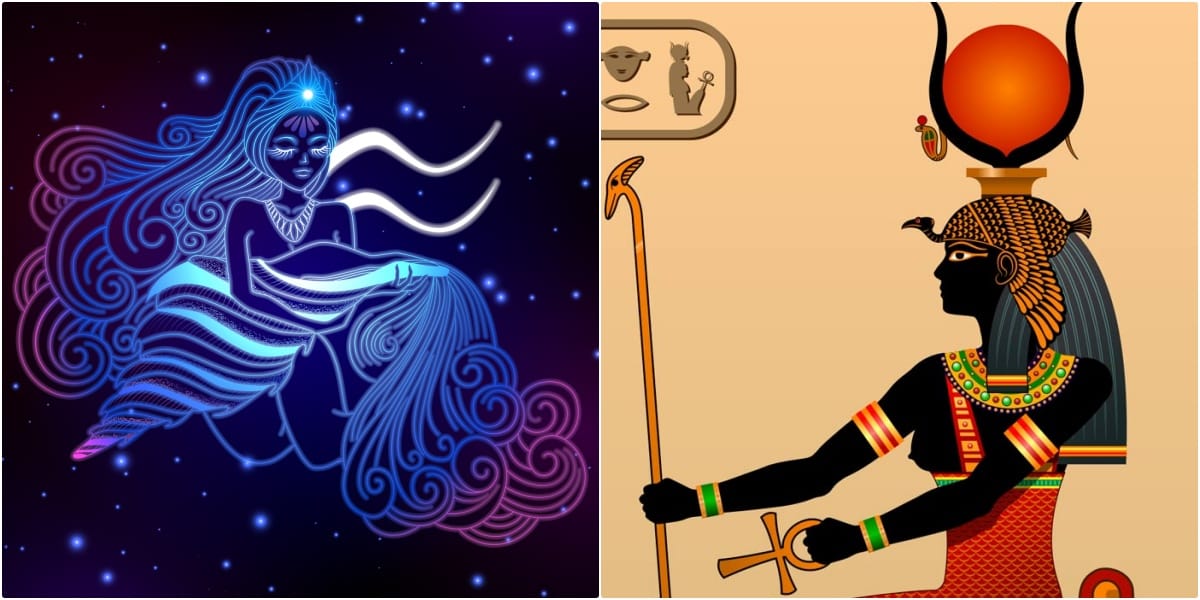
The lists widely shared today match certain days of the year with the names of gods. Among these names are the Nile, Amun-Ra, Mut, Geb, Osiris, Isis, Thoth, Horus, Anubis, Seth, Bastet and Sekhmet. Each is credited with personality traits such as leadership, intuition or loyalty. Such lists, however, usually cite no sources.
The TDV Encyclopedia of Islam defines astrology, which rests on the belief that the stars influence people and events, as a “pseudo-science”. In this article we do not go into personality readings. Instead, we explain how the Egyptians looked at the sky and where the idea of zodiac signs came from.
Why Did the Egyptians Observe the Sky?
In Egypt, agriculture and daily life depended on the annual flood of the Nile. According to the TDV Encyclopedia of Islam, the Egyptians linked the star Sirius with the flooding of the Nile. Observing the sky was therefore a practical necessity.
The Egyptian calendar was also used in the astronomical measurements of antiquity. According to the encyclopedia, the summer solstice measured by Meton and Euctemon of Athens in 432 BC is dated to the morning of 21 Phamenoth in the Egyptian calendar. In the ninth year of the reign of Ptolemy III it had also been calculated that 152 solar years were 37 days longer than 152 Egyptian years.

There were also special places for observation. According to the encyclopedia, the building complex that Ramesses II had built at Thebes, later known as the Ramesseum, contained an astronomical observation room.
Decans: Egypt’s Divisions of the Sky
In the debate over zodiac signs according to ancient Egyptian mythology, the really important information concerns the decans. According to the TDV Encyclopedia of Islam, the Egyptians divided the ecliptic, which has an important function in astrology, into thirty-six sections of 10 degrees each. According to the encyclopedia, it was by inspiration from this that the zodiac was later divided into twelve parts of 30 degrees each.
This shows that the Egyptians made an indirect contribution to today’s system of zodiac signs. It does not, however, confirm the lists that match the twelve signs with the names of gods. The Egyptian legacy lives on rather in the tradition of dividing the sky into regular sections.
Where Did Zodiac Astrology Come From?
According to the TDV Encyclopedia of Islam, the art of making predictions by looking at the position of the stars at the moment of birth was first practiced by the Babylonians. This art developed in Sasanian lands, with a strong influence from India. The Babylonians used two kinds of divination: examining the livers of sacrificed animals and observing the sky.
According to the encyclopedia, the peoples of Mesopotamia believed that every star had a sphere of influence on earth. To study the sun and the moon they built their temples in pyramid form, that is, as ziggurats. The Babylonian priests’ interest in the heavenly bodies came from their belief in the bodies’ sacredness. These movements were at first associated only with the fate of kings and nations, and over time were extended to all people.
Other cultures divided the sky into sections too. The Chinese divided the moon’s monthly movement into twenty-eight parts and the sun’s yearly movement into twelve. The Greeks held that the heavenly bodies, especially the sun, influenced the seas, plants, animals and people. According to the encyclopedia, the zodiac, the band of the signs, was regarded as the place where this interaction was strongest.
The basis of the concept of the auspicious hour (eşref saat) also goes back to the Sumerians, the first settled people of Mesopotamia. The branch of astrology that tries to determine the most suitable time to begin an undertaking is called ikhtiyarat (elections). According to the encyclopedia, this practice was known to the Babylonians and the Egyptians and was also widespread among the pre-Islamic Arabs.
Those who practiced astrology looked at the mutual movements of the seven planets and the twelve signs. The planets’ relation to the signs indicated lucky (sad) or unlucky (nahs) times. The auspicious hour was the most suitable and luckiest time to do something.
In the Hellenistic period, Ptolemy, who lived in Alexandria, wrote the astronomical work known as the Almagest (al-Majisti). He also wrote an astrological work called the Tetrabiblos. According to the encyclopedia, Ibn Khaldun reports that Ptolemy himself said that predictions in this field could not go beyond conjecture. We discussed how Alexander was hailed in Egypt by the priests of Amun as “son of Amun” in our article on Alexander the Great and the Ottoman sultans.
Who Were the Gods on the List?
Most of the names on the popular lists are indeed important gods of Egyptian religion. However, the encyclopedia entries used in this article contain no system matching these gods with birthdays. The lists combine the names of the gods with modern horoscope readings.
According to the TDV Encyclopedia of Islam, the priests of Amun held great power in Egypt. When Amenhotep IV proclaimed Aten, depicted as the sun disk, the sole god and rejected the other gods, they reacted most strongly. This reform was bloodily swept away after the pharaoh’s death.
Osiris, Isis, Horus and Anubis, who appear on the lists, are well-known figures of the Egyptian world of belief. The mythology of these gods belongs to a far older tradition than modern readings of the zodiac signs. You can also watch the video below on the subject.
The Twelve-Animal Calendar of the Pre-Islamic Turks
The idea of determining character by the time of birth is not attributed to Egypt alone. According to the encyclopedia, the pre-Islamic Turks, who held a view of a nine-layered universe, accepted that there were nine signs in each of the four directions, thirty-six in all. In their calendar bearing the names of twelve animals, each month carried the traits of an animal, and those born in that month were thought to share those traits.
Astrology in Islamic Thought and Among the Ottomans
According to the encyclopedia, among the pre-Islamic Arabs there were those who worshipped the stars and those who attributed natural events to the influence of the stars. Islam abolished these beliefs, finding them contrary to the principle of tawhid, the oneness of God. In the Quran the moon, the sun, the stars and the constellations are mentioned as beings that bear witness to God’s knowledge and power. The hadiths also state that attributing creative power to the stars is incompatible with belief in tawhid.
According to the encyclopedia, Ibn Khaldun found the claim that the stars act as causes rationally baseless. The books written for horoscopes, called yıldızname, are also described in the encyclopedia as “works far from scientific”. In the West, Galileo, Copernicus and Kepler likewise separated astrology from astronomy and declared it unscientific.
Even so, astrologers enjoyed esteem at courts from the Umayyads and especially the Abbasids onward, and the Ottoman palace was one of them. According to the TDV Encyclopedia of Islam, the chief astrologer’s most important task was to determine the right time for important affairs. Foremost among these were the sultan’s accession, the birth of a prince, the declaration of war and the setting out of the army. The auspicious hour was also sought for handing the seal to the grand vizier, launching ships and the weddings of sultans.
We explained how the auspicious hour was fixed for the sultans’ marriages in our article on harem life.
Frequently Asked Questions
Did zodiac signs according to ancient Egyptian mythology really exist?
The popular twelve-god lists usually cite no sources. According to the TDV Encyclopedia of Islam, the Egyptians had divided the sky into 36 sections; the twelve-sign zodiac took shape later, inspired by this.
Which gods appear on the list of Egyptian zodiac signs?
The lists use names such as the Nile, Amun-Ra, Mut, Geb, Osiris, Isis, Thoth, Horus, Anubis, Seth, Bastet and Sekhmet.
What is a decan?
It is each of the thirty-six 10-degree sections of the ecliptic.
How did the Egyptians set their calendar?
According to the TDV Encyclopedia of Islam, they had linked the star Sirius with the flooding of the Nile. The Egyptian calendar was also used in the astronomical measurements of antiquity.
Are astrology and astronomy the same thing?
No. In the Islamic scientific tradition astronomy was called ilm-i felek and astrology ilm-i ahkam-ı nücum. The TDV Encyclopedia of Islam defines astrology as a pseudo-science.
Who started zodiac astrology?
According to the TDV Encyclopedia of Islam, horoscopes based on the moment of birth were first practiced by the Babylonians.
What did the Ottoman chief astrologer do?
He fixed the auspicious hour, that is, the most suitable time, for affairs such as accessions, declarations of war and weddings.
Conclusion
The list of zodiac signs according to ancient Egyptian mythology is more a modern interpretation than the real celestial heritage of ancient Egypt. The Egyptians had linked Sirius with the Nile flood and divided the ecliptic into 36 decans; the twelve-sign zodiac took shape later, inspired by this division. Horoscopes based on the moment of birth, on the other hand, were of Babylonian origin. While Islamic scholars questioned astrology, the courts kept up the search for auspicious times.