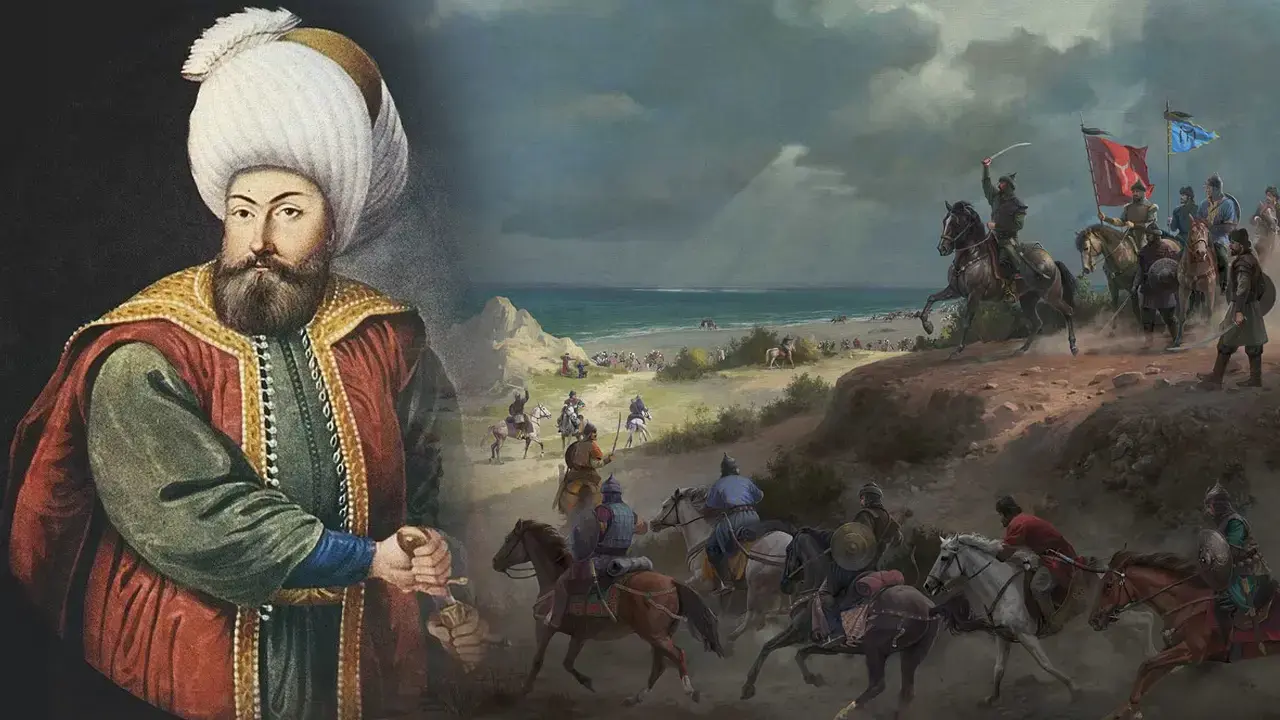
Osman Bey’s title, or more precisely his laqab (honorific epithet), appears in the sources as “Fahreddin”, meaning “pride of the faith”. Halil İnalcık refers to the founder of the beylik with this epithet as “Fahrüddîn Osman Beg”. The founding bey is also known by the title gazi. Contemporary writers, meanwhile, recorded him under different names. In this article we examine the meaning of the epithet, his titles and the sources of these names.
Quick Summary
- Osman Bey’s title in the sense of a personal epithet was Fahreddin, meaning “pride of the faith”.
- In his 2007 article, Halil İnalcık uses this epithet before the founder’s name.
- Gazi was less a personal epithet than a title borne by frontier beys.
- The Arab traveller Ibn Battuta gives his name with a diminutive suffix as “Osmancuk”.
- The Byzantine historian Pachymeres records him as “Atmanes”.
- His son Orhan Bey’s epithet in the documents, by contrast, is Şücaeddin.
Contents
- What is a laqab?
- The epithet Fahreddin and its meaning
- The title gazi and the alp tradition
- His different names in the sources
- Comparison with Orhan Bey’s epithets
- The epithets of later sultans
- Frequently asked questions
What Is a Laqab?
A laqab is an additional name that identifies a person apart from his given name. The TDV Encyclopedia of Islam notes that the word is Arabic and that its plural is “elkāb”. In the Islamic world, caliphs and sultans granted official epithets to statesmen in ceremonies. The caliph, for example, gave the Seljuk vizier Nizam al-Mulk the epithet “kıvâmü’d-dîn ve’d-devle”.
Giving epithets was also an old tradition among the Turks. According to the encyclopedia, Mahmud of Kashgar writes that the expression “at atmak” was used for this. In the Dede Korkut stories, a child did not receive a name before performing a heroic deed. The son of Dirse Khan was named Bugach because he overcame a bull. In the old Turkic states of Central Asia, the word “kara” had become common as an epithet.
We discussed the title side of this old tradition in our article on ruler titles in pre-Islamic Turkic states. The difference between an epithet and a title should also be made clear from the start. A title, such as “bey” or “sultan”, indicates an office or position. An epithet belongs directly to the person and distinguishes him from others. When people ask about Osman Bey’s title, they usually mean this personal epithet.
Osman Bey’s Title: The Epithet Fahreddin
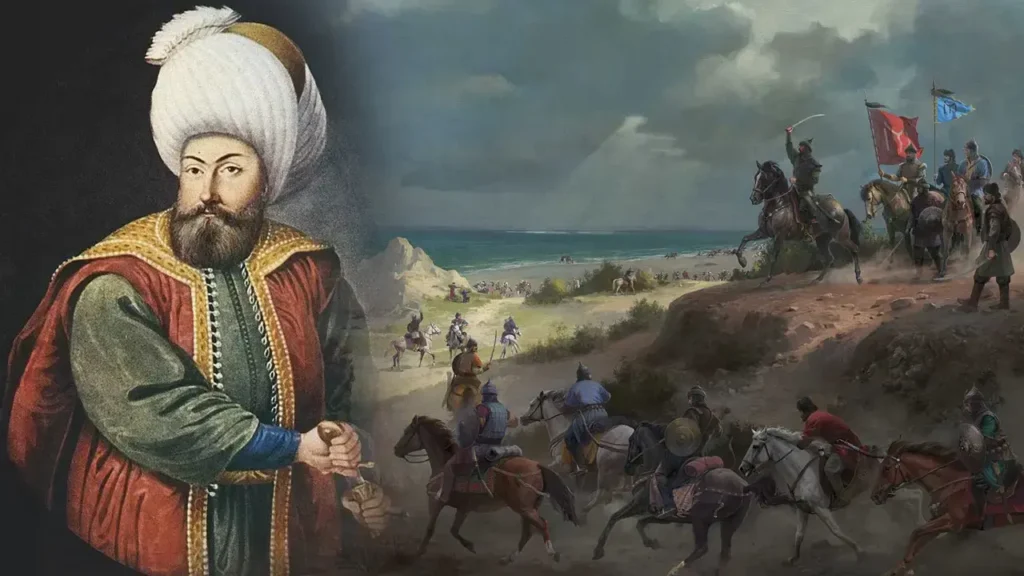
The founding bey’s epithet was Fahreddin. The word combines the Arabic “fahr” (pride, honor) and “ed-dîn” (the faith). That is why it is translated as “pride of the faith” or “honor of the faith”. In his 2007 article published in Belleten, Halil İnalcık uses the epithet before the name.
Epithets of this pattern were common in the frontier world of the period. In the same article İnalcık mentions the Seljuk sultan Ghiyath al-Din Kaykhusraw III, the Kastamonu frontier emir Husameddin Çoban and the Eskişehir deputy Cacaoğlu Nureddin. All three names are built on the same structure. Epithets ending in “-üddin” or “-eddin” linked their bearers to the Islamic world’s tradition of honorific names.
Fahreddin was also a widely used epithet in the learned profession. The TDV Encyclopedia of Islam records that people named İlyas were often called by the epithet “Fahreddin” or “Şücaeddin”. Popular accounts rarely say which document Osman Bey’s title is based on. It is therefore more accurate to cite İnalcık’s article as a reliable basis.
The Title Gazi and the Alp Tradition
Today the founding bey is best known as “Osman Gazi”. Gazi, however, was a title rather than a personal epithet, and Osman Bey’s title of gazi was shared with other frontier leaders. According to the TDV Encyclopedia of Islam, in the frontier society of the period the titles “alp” and “gazi” were used in the same sense. Alps were experienced, well-armed commanders who led Turkmen warriors on campaign.
The encyclopedia notes that his companions were also alps such as Turgut, Aykut, Saltuk and Hasan. He himself was an alp and began his gaza activity with the conquest of Kulaca in 1284. The family tree in the Düsturname shows that his ancestors also bore the title alp. Gündüz Alp and Gökalp are examples of these names.
The Byzantine historian Georgios Pachymeres had also noticed this side of him. According to İnalcık, Pachymeres presents him as the boldest and most energetic raiding leader among the Turkmens of the frontier. The title gazi grew even greater in the next generation. His son Orhan was called “sultânü’l-guzât”, “sultan of the gazis”, in an inscription dated 1337.
For the founding bey’s life, see our article on his life and deeds. The details of his campaigns are in our article on the places he conquered.
His Different Names in the Sources
The founding bey’s name does not appear in a single form in the sources. According to the TDV Encyclopedia of Islam, the Arab traveller Ibn Battuta also gives his name as “Osmancuk”. When describing Orhan Bey, the traveller calls him “İhtiyârüddin Orhan Bey, son of Sultan Osmancık”. This form is built with the Turkish diminutive suffix “-cık, -cuk”.
Byzantine sources show a different spelling. Pachymeres records the founding bey under the name “Atmanes”. İnalcık stresses that this record is the first time his name appears in a contemporary foreign history. The founding bey thus enters the historical stage through a contemporary witness.
Some researchers have drawn different interpretations from this spelling. The historian Heywood suggested that he might have been someone called “Ataman” who came from north of the Black Sea. İnalcık and the TDV Encyclopedia of Islam consider this hypothesis a remote possibility. The question of the founder’s name was also the subject of an article by Adnan Erzi published in the 1940s.
A small detail also stands out on the title side. The spelling “Beg” used by İnalcık reflects the older pronunciation of the word “bey”. In Orhan Gazi’s endowment deed (vakfiye) of 1360, Orhan and his father are called by the title “bey”, while his grandfather Ertuğrul is named only by his name. Uzunçarşılı links this difference to father and son being regarded as rulers at the head of the beylik.
Comparison with Orhan Bey’s Epithets
Comparing the father’s epithet with the son’s helps us understand this tradition better. İsmail Hakkı Uzunçarşılı shows that Orhan Bey’s epithet appears in the documents as Şücaeddin. This epithet occurs in the endowment deeds of 1324 and 1360 and in the 1337 inscription of the Şehadet Mosque in Bursa. The phrase in the inscription is “şücâü’d-dünyâ ve’d-dîn”, meaning “the hero of the world and the faith”.
Other sources, however, record different epithets for Orhan Bey. According to Uzunçarşılı, Ibn Battuta gives his epithet as İhtiyârüddin. An Arabic collection of model letters (münşeat) in Paris uses the epithet Seyfüddin. This variety shows that epithets of the “-üddin” pattern could vary from source to source.
The epithets of father and son share the same pattern. Fahreddin means “pride of the faith”, Şücaeddin “hero of the faith” and Seyfüddin “sword of the faith”. İhtiyârüddin can be translated as “the chosen of the faith”. You can read how the beylik grew under Orhan in our article on the expansion of the beylik under Orhan Gazi.
The Epithets of Later Sultans
Fahreddin is of a different type from the famous epithets given to later sultans. According to the TDV Encyclopedia of Islam, some of these epithets arose in their own time. “Hüdavendigar” for Murad I, “Yıldırım” (the Thunderbolt) for Bayezid I and “Yavuz” (the Grim) for Selim I belong to this group. Bayezid II was also given the epithets “Veli” and “Sofu”.
Other epithets became widespread much later. According to the encyclopedia, “Fatih” (the Conqueror) for Mehmed II and “Kanuni” (the Lawgiver) for Suleiman I became established especially in the eighteenth and nineteenth centuries. The epithets “Sarı” (the Blond) for Selim II and “Avcı” (the Hunter) for Mehmed IV also became common in the same process. Only the epithet “the Magnificent” had taken root in European literature in Suleiman I’s own time.
Most of these epithets describe a quality or achievement of the person. Fahreddin, by contrast, comes from the Islamic world’s tradition of official honorific names. In this respect Osman Bey’s title resembles the epithets of the Seljuk sultans more than names such as “Yıldırım” or “Yavuz”. For details, see our articles on Bayezid the Thunderbolt and the Battle of Ankara and why Suleiman was called the Magnificent.
Frequently Asked Questions
What was Osman Bey’s title?
His laqab, or honorific epithet, was Fahreddin. This epithet of Arabic origin means “pride of the faith”. Halil İnalcık also refers to the founding bey by this epithet.
Which sultan bore the epithet Fahreddin?
This epithet belongs to the son of Ertuğrul Gazi, the founder of the beylik and of the dynasty. The founding bey died in 1324. His son Orhan is known by the epithet Şücaeddin.
Why is Osman Gazi called gazi?
Gazi was a title borne by leaders who led raids against Byzantium on the frontier. According to the TDV Encyclopedia of Islam, in the frontier society of the period the titles alp and gazi were used in the same sense. The founding bey, too, emerged from this tradition as an alp.
How does Ibn Battuta refer to the founding bey?
The traveller gives his name in a diminutive form. When introducing Orhan Bey, he calls him “son of Sultan Osmancık”.
Conclusion
Osman Bey’s title in the sense of his laqab was Fahreddin, meaning “pride of the faith”. This epithet is one of the honorific names of the “-üddin” pattern that were common in the Seljuk frontier world. Gazi, by contrast, was less a personal epithet than a title rooted in the alp tradition. Contemporary writers such as Ibn Battuta and Pachymeres also recorded the founding bey in different forms according to their own languages.
Sources
- TDV Encyclopedia of Islam, entry “Osman I”
- TDV Encyclopedia of Islam, entry “Orhan”
- TDV Encyclopedia of Islam, entry “Lakap” (Laqab)
- Halil İnalcık, “Osmanlı Beyliği’nin Kurucusu Osman Beg” [Osman Beg, the Founder of the Ottoman Beylik], Belleten, LXXI/261 (2007), pp. 479–536.
- İsmail Hakkı Uzunçarşılı, “Orhan Gazi’nin Vefat Eden Oğlu Süleyman Paşa İçin Tertip Ettirdiği Vakfiyenin Aslı” [The Original of the Endowment Deed Orhan Gazi Drew Up for His Late Son Süleyman Pasha], Belleten, XXVII/107 (1963), pp. 437–443.