The places where Christians go on pilgrimage are led by Jerusalem, Bethlehem and Nazareth, where Jesus is believed to have been born, to have lived and to have been crucified. In Europe, Rome and Santiago de Compostela stand out, and among the shrines devoted to the Virgin Mary, Lourdes and Fatima. In Turkey, the House of the Virgin Mary near Ephesus and the Church of St Peter in Antakya are also important places of pilgrimage.
Quick Summary
- In Christianity, visiting holy places is not an obligatory act of worship as it is in Islam; it is a journey that depends on personal piety.
- The oldest holy pilgrimage centre is Jerusalem; construction of the Church of the Holy Sepulchre began in 333 and was completed in 335.
- The Catholic Church grants indulgences to those who visit Jerusalem, Rome and Santiago in holy years.
- The most visited holy site in Europe is Lourdes, with about 5 million visitors a year.
- Rights over the holy places led to a crisis in the Ottoman period that ended in the Crimean War.
Contents
- The idea of pilgrimage in Christianity
- Jerusalem: the first and holiest centre
- Bethlehem and Nazareth
- Rome and Santiago de Compostela
- Places of pilgrimage linked to the Virgin Mary
- Places of pilgrimage in Turkey
- The holy places and the Ottomans
- Frequently asked questions
Where Christians Go on Pilgrimage and the Idea of Pilgrimage
According to the “Hac” (Pilgrimage) entry of the TDV Encyclopedia of Islam, the importance and meaning of the holy journey are not very clear in the New Testament. According to the Gospel of Luke, Jesus visited the Temple in Jerusalem with his family when he was twelve. The first Christians, as in Judaism, also continued to go to the Temple in Jerusalem for a time.
According to the encyclopedia, in Judaism visiting the Temple three times a year was an obligation. In Christianity, however, pilgrimage ceased to be a communal duty and became a journey of personal piety. There is no set time for this journey; the journey to Jerusalem is usually made later in life. Some pilgrims set out to ask for a grace, others to give thanks for one.
The tombs of saints and the objects that belonged to them also became places of pilgrimage. According to the encyclopedia, churches holding fragments of saints’ bodies or clothing are visited as centres of healing and forgiveness. This belief led to the multiplication of holy places over time.
Jerusalem: The First and Holiest Centre
From the very beginning, the holiest city of the Christian world has been Jerusalem. According to the encyclopedia, in the 3rd century Origen reports that the cave of the Nativity in Bethlehem and Golgotha, held to be the place of the crucifixion, were being visited. The church building begun by Emperor Constantine played a major role in the growth of visits to Jerusalem.
According to the “Kudüs” (Jerusalem) entry of the TDV Encyclopedia of Islam, Constantine’s mother Helena had a church built on the Mount of Olives in 326. In 333, construction of the Church of the Holy Sepulchre began at the spot where Jesus is held to have been crucified, and the building was completed in 335. The belief that Helena had found pieces of the “True Cross” greatly increased the number of visitors travelling to Palestine in the 4th century.
Eastern Christians have their own traditions connected with Jerusalem. According to the encyclopedia, in Armenian “mahdesi” means a person who has seen the holy fire lit in Jerusalem at Easter, and this title is given to a pilgrim returning from Jerusalem. Russian pilgrims, for their part, take white shrouds to Jerusalem and bathe wrapped in them in the River Jordan, where Jesus was baptized.
Bethlehem and Nazareth
Bethlehem, where Jesus is believed to have been born, lies 8–10 km south of Jerusalem. According to the TDV Encyclopedia of Islam, its name means “house of bread” in Hebrew. The account that the birth took place in a cave east of the city goes back to Justin Martyr, who lived in the 2nd century. The location of the cave has not changed since the 3rd century, and the Church of the Nativity stands above it. According to the encyclopedia, the city also has a separate place of pilgrimage called the “Milk Grotto”, where drops of Mary’s milk are believed to have fallen to the ground.
Nazareth is the city where Mary lived and where Jesus spent the years before his prophethood. According to the encyclopedia, the announcement of Jesus’ birth to Mary by Gabriel is associated with this city. For this reason, the Church of the Annunciation in Nazareth is an important place of pilgrimage. The encyclopedia also relates the belief that Mary’s house in Nazareth was carried by angels to Loreto in Italy.
Rome and Santiago de Compostela
When Palestine passed into Muslim hands, new pilgrimage centres emerged in Europe. According to the TDV Encyclopedia of Islam, Rome overtook the other centres thanks to the tombs of the apostles Peter and Paul and of martyred saints. According to the encyclopedia, the papacy existed as an independent state between 756 and 1870 and has done so again since 1929. The name Vatican comes from the name of the hill on the west bank of the Tiber and of the papal palace there.
In Santiago de Compostela in Spain lies a tomb attributed to the apostle James the Great. In the Middle Ages, walking all the way to Santiago in a hair shirt was considered a heavy penance for sins. According to the encyclopedia, the Catholic Church grants indulgences to those who visit Jerusalem, Rome and Santiago in the periods declared holy years. For Santiago, the years in which 25 July falls on a Sunday are regarded as holy. The routes leading to Santiago from every corner of Europe are still walked today under the name “Camino de Santiago”.
Places of Pilgrimage Linked to the Virgin Mary
After the 12th century, places of pilgrimage connected with Mary also developed. According to the encyclopedia, some of them are linked to statues and paintings of the “Black Madonna” that are regarded as miraculous. Chartres and Rocamadour in France, Montserrat in Spain and Częstochowa in Poland are examples of this type. The encyclopedia notes that the black colour of these images may be explained by their having been hidden underground for long periods so that they would not fall into enemy hands. Their locations are believed to have been revealed mostly through a dream.
The other group consists of places where Mary is believed to have appeared. Among these, Lourdes in France (1858), Fatima in Portugal (1917) and the Rue du Bac in Paris (1830) stand out. According to the encyclopedia, Lourdes is visited by about 5 million people a year and Fatima by 4 million. The most famous pilgrimage site in the Americas is Guadalupe in Mexico, with 14 million visitors a year.
Places of Pilgrimage in Turkey
Turkey is also home to important sites in the history of Christianity. The House of the Virgin Mary near the Selçuk district of İzmir is a place of pilgrimage where Mary is believed to have spent her last years. The council that met in 431 in the nearby ancient city of Ephesus is one of the important gatherings in the history of Christianity. Pope Paul VI visited the House of the Virgin Mary in 1967, John Paul II in 1979 and Benedict XVI in 2006. The Basilica of St John in Selçuk also rises over the spot believed to be the tomb of the apostle John.
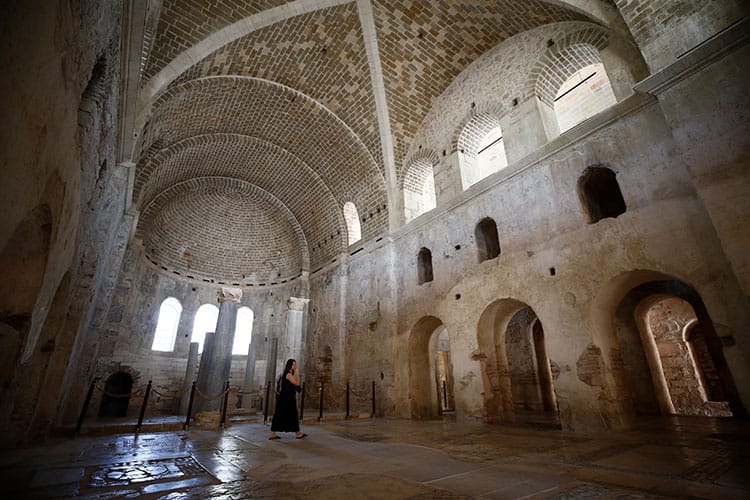
The Church of St Peter (Saint Pierre) in Antakya is a cave church carved into the rock. According to the New Testament, it was in Antioch that the followers of Jesus were first called “Christians”. For this reason, the church is considered one of the oldest Christian places of worship and is recognized by the Vatican as an official place of pilgrimage. The video below, which introduces the church, also describes this historic site.
There are other places in Anatolia linked to the history of Christianity. İznik, where the first ecumenical council met in 325, holds a symbolic place in this respect. The rock-cut churches and monasteries of Cappadocia also welcome large numbers of visitors every year.
The Holy Places and the Ottomans
Jerusalem and Bethlehem remained under Ottoman rule for about four centuries, from 1516–1517 to 1917. During this period, which denomination would hold the rights in the Church of the Holy Sepulchre and the Church of the Nativity was regulated by the state’s decrees. Disputes among the different Christian communities, however, often turned into international issues. A decree issued in 1852 fixed the existing arrangement in these churches as the “status quo”, and this arrangement is still largely preserved today.
According to the entry Reform Edict (Islahat Fermanı) in the TDV Encyclopedia of Islam, Russia used the failure to meet its demands concerning the holy places in and around Jerusalem as a pretext. It demanded the official protection of the Ottoman Orthodox, and the rejection of this demand started the Crimean War of 1853–1856. We discussed the legal status of non-Muslims in our article on the millet system, and the city’s departure from Ottoman rule in our article on the loss of Jerusalem.
Frequently Asked Questions
What is the most important place where Christians go on pilgrimage?
Jerusalem. The Church of the Holy Sepulchre, on the site where Jesus is believed to have been crucified and buried, is the centre of Christian pilgrimage.
Is pilgrimage obligatory in Christianity?
No. This journey is not a compulsory act of worship tied to a set time, but a visit based on personal piety.
Where do Christians go on pilgrimage in Turkey?
The best known are the House of the Virgin Mary in Selçuk and the Church of St Peter in Antakya. The ancient city of Ephesus is also an important place to visit for the history of Christianity.
Which is the most visited holy site in Europe?
According to the TDV Encyclopedia of Islam, it is Lourdes in southern France. About 5 million people visit it every year.
Conclusion
The places where Christians go on pilgrimage range from the cities of Palestine linked to the life of Jesus to the tombs of saints and the places where Mary is believed to have appeared. While Jerusalem, Rome and Santiago became the historic pilgrimage centres, Lourdes and Fatima came to the fore in the modern period. In the Ottoman period, the administration of the holy places became a matter of international politics.