What did the Ottoman Empire announce at the time of the Shipyard Conference? The answer is the First Constitutional Era. On 23 December 1876, when the great powers met in Istanbul to discuss the Balkan crisis, the Kanun-ı Esasi, the Ottoman constitution, was proclaimed. In this article we look at why the conference met, why the constitution was proclaimed on that very day and what happened afterward, with sources.
Quick Summary
- The Shipyard Conference met in Istanbul between 23 December 1876 and 20 January 1877.
- On the first day of the conference the Kanun-ı Esasi was proclaimed and the Constitutional Era began.
- The aim was to make the reforms the great powers wanted to impose look unnecessary.
- The General Assembly (Meclis-i Umumi) rejected the conference’s harsh proposals.
- The crisis ended in the Russo-Turkish War of 1877–1878, known as the War of ’93.
Contents
- Short answer
- The Balkan crisis
- The conference and its participants
- Why was the constitution proclaimed that day?
- What did the Kanun-ı Esasi bring?
- The proposals and the answer
- After the conference
- Comparison with the Reform Edict
- Frequently asked questions
What Did the Ottoman Empire Announce at the Time of the Shipyard Conference? Short Answer
The state proclaimed the Kanun-ı Esasi on 23 December 1876, the day of the first session of the Shipyard Conference. With this constitution the First Constitutional Era began. The TDV Encyclopedia of Islam defines the Meşrutiyet as the period of constitutional monarchy.
This decision was no coincidence. Proclaiming the constitution on the same day as the conference was a deliberate choice meant to send a message to the great powers. The state wanted to show that it was carrying out reforms of its own will, without having them imposed from outside.
The Balkan Crisis That Led to the Conference
According to the TDV Encyclopedia of Islam, the Istanbul Conference met to discuss the crisis that had begun with the Herzegovina uprising of 1875. A year later the crisis deepened with the Bulgarian uprising and the wars waged against Serbia and Montenegro. The encyclopedia stresses that the Bulgarian uprising was the most important phase of the crisis.
The suppression of the Bulgarian uprising caused a great outcry in European public opinion. Russia was preparing to act as the protector of the Christian peoples of the Balkans. Britain, for its part, was worried about Russia approaching the Straits. These balances brought the great powers to the conference table.
At the same time, a major political change was taking place in Istanbul. In 1876 Sultan Abdülaziz was deposed, and after the short reign of Murad V, Abdülhamid II came to the throne. Statesmen who favored a constitution had obtained a promise of one from the new sultan.
The Shipyard Conference and Its Participants
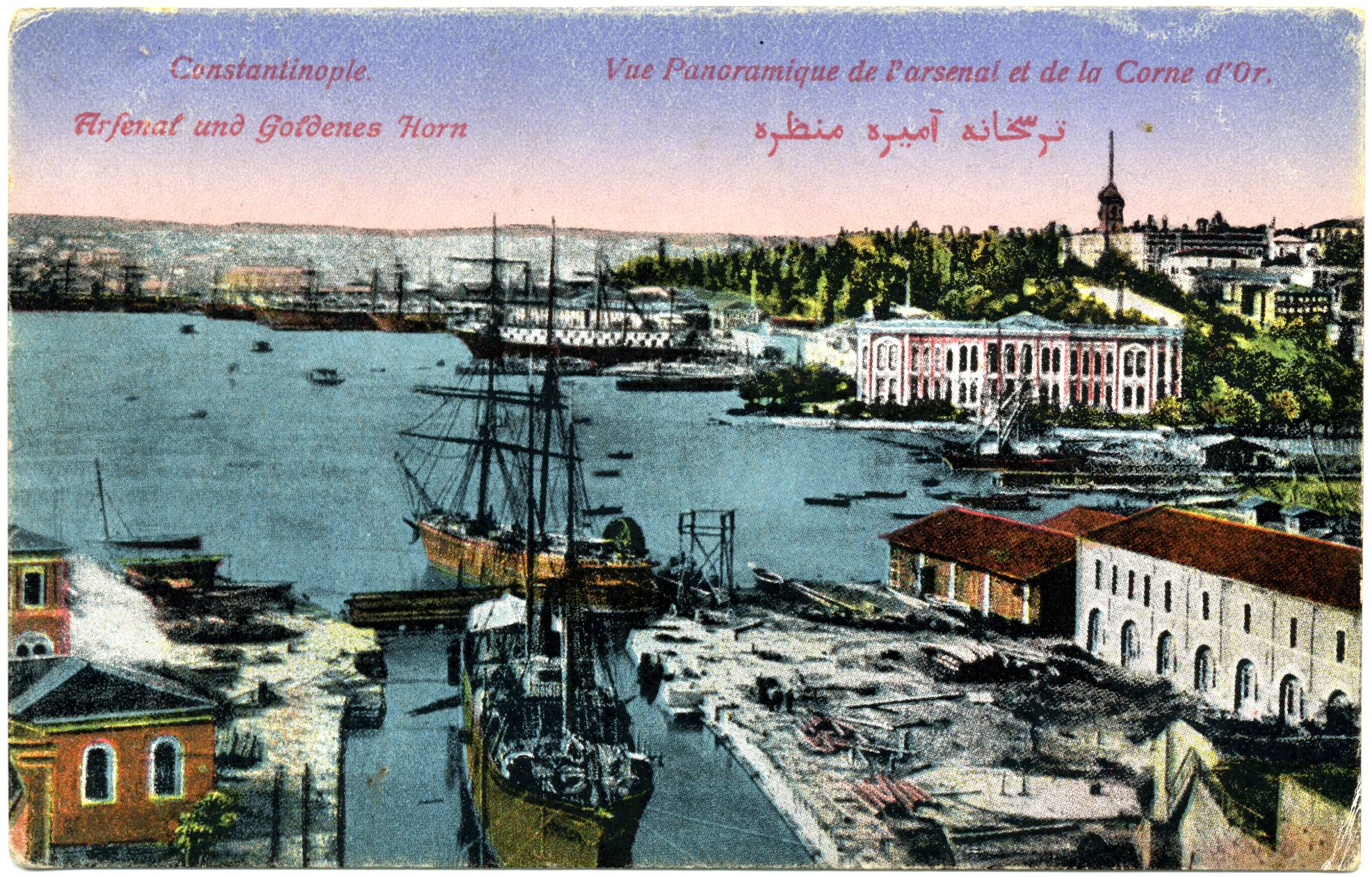
The conference takes its name from the fact that it met on the upper floor of the Ministry of the Navy building in Kasımpaşa, that is, at the Tersane, the naval shipyard. In the sources it is also called the Istanbul or Constantinople Conference. According to the TDV Encyclopedia of Islam, the participants were as follows:
| State | Representatives |
|---|---|
| Britain | Lord Salisbury, Sir Henry Elliot |
| Russia | Ignatiev |
| France | Count Bourgoing, Count Chaudordy |
| Austria-Hungary | Count Zichy, Baron Calice |
| Germany | Baron Werther |
| Italy | Count Corti |
| Host state | Foreign Minister Saffet Pasha, İbrahim Edhem Pasha |
According to the encyclopedia, at Britain’s suggestion the powers sent a second representative alongside their ambassadors in Istanbul; Russia, Germany and Italy did not see the need. The host state was represented by Foreign Minister Saffet Pasha and by İbrahim Edhem Pasha, who had been brought from the Berlin embassy to head the Council of State.
Why Was the Constitution Proclaimed on That Very Day?
Midhat Pasha led the work on the constitution. According to the TDV Encyclopedia of Islam, Midhat Pasha was appointed grand vizier on 19 December 1876 and sped up the work. The biggest sticking point was Article 113, which gave the sultan the power of exile. Once Midhat Pasha made a concession on this point, the text was proclaimed on 23 December 1876, the day the conference met.
The encyclopedia describes that day as follows: while the delegates were deliberating inside, cannons began to fire outside. Saffet Pasha told the delegates that the guns were announcing the proclamation of a constitution providing for reform throughout the empire. The message was clear: the state had moved to constitutional government and had undertaken to carry out reforms for all its subjects.
The aim of this move was to make the special reforms that the Shipyard Conference wanted to impose on the Balkan provinces look unnecessary. Since the constitution granted equal rights to all subjects, there was no longer any need for separate arrangements under international supervision. For the intellectual background of the Constitutional Era, see our article who were the Young Ottomans?
According to the encyclopedia, however, Saffet Pasha’s announcement made no positive impression on the delegates. The Russian representative Ignatiev ignored such displays and asked to discuss the item on the agenda, and the conference went on. The proposals presented had in fact been settled at preparatory meetings in early December, largely through agreement between Ignatiev and Salisbury. According to the encyclopedia, Salisbury’s stance showed that Britain’s Eastern policy, based on Ottoman territorial integrity, was cracking. The Sublime Porte sent Odian Efendi, undersecretary of public works, to Paris and London to separate Russia from Britain and France, but without result.
What Did the Kanun-ı Esasi Bring?
The Kanun-ı Esasi was the state’s first written constitution. While preserving the sultan’s broad powers, it added a new institution to the government: the General Assembly (Meclis-i Umumi). This assembly had two chambers.
- Heyet-i Ayan: The upper chamber, whose members were appointed by the sultan.
- Heyet-i Mebusan: The lower chamber, whose members were elected and represented the people.
The constitution guaranteed basic rights such as the equality of subjects before the law and personal security. It also stated that the official language of the state was Turkish and that knowing Turkish was a condition for entering public service. Rights of education, press and petition were left to be regulated by law.
However, the constitution also gave the sultan the power to open and dissolve parliament. In addition, Article 113 gave the sultan directly the power to exile people considered a threat to the security of the state. These articles formed the legal basis that allowed the Constitutional Era to be suspended so quickly.
In this respect, the Kanun-ı Esasi was a first and limited step from absolute to constitutional monarchy. Even so, it brought the concepts of representation and law into political life for good. When it came back into force in 1908, its impact was far wider.
The Proposals of the Shipyard Conference and the Answer Given
The great powers were not impressed by this move. According to the TDV Encyclopedia of Islam, the joint program they had prepared set out the territories to be ceded to Serbia, Montenegro and Bulgaria. It also provided for a new administrative, military, judicial and financial structure for Bulgaria and Bosnia-Herzegovina, together with a system of international supervision. These terms were very heavy for the state.
The state’s representatives said the answer had to be discussed in a General Assembly attended by leading figures. The assembly met on 18 January 1877 and rejected the proposals, accepting the risk of facing even harsher demands. The sultan approved the decision, and the conference broke up without result on 20 January 1877.
What Happened after the Shipyard Conference?
The failure of the conference made war inevitable. Russia declared war in April 1877, and the war remembered as the War of ’93 began. In 1878 it ended with heavy territorial losses under the treaties of San Stefano and then Berlin. For an overview of these wars, see our article on the Ottoman-Russian wars.
At home, too, the Constitutional Era did not last long. According to the TDV Encyclopedia of Islam, Midhat Pasha was dismissed on 5 February 1877, the forty-ninth day of his grand vizierate, and exiled abroad. He was later tried; his death sentence was commuted to life imprisonment, and in July 1881 he was sent to Taif. Parliament, meanwhile, was prorogued in February 1878. For an assessment of this period, read our article on the reign of Abdülhamid II.
According to the encyclopedia, Midhat Pasha had been born in Istanbul in 1822, and his real name was Ahmed Şefik. In October 1864 he became governor of the Danube province, where he achieved important progress in transport and agriculture. His exile in Taif lasted about three years, and on the night of 7–8 May 1884 he was strangled in his cell. The official cause of death was announced as a carbuncle (şirpençe).
A Similar Question Often Confused in Exams: The Reform Edict
In exams this question is often confused with the Reform Edict. Both events were reforms timed to prevent intervention by the great powers. The table below shows the difference.
| Reform | Year | Diplomatic meeting it was timed with |
|---|---|---|
| Reform Edict | 1856 | Paris Peace Conference |
| Kanun-ı Esasi (First Constitutional Era) | 1876 | Shipyard (Istanbul) Conference |
For what the Constitutional Era meant for the regime, see our article on regime change in the Ottoman Empire.
Frequently Asked Questions
What did the Ottoman Empire announce at the time of the Shipyard Conference?
It proclaimed the Kanun-ı Esasi and moved to the First Constitutional Era. The constitution was proclaimed on 23 December 1876, the day of the conference’s first session.
Where and when did the Shipyard Conference meet?
It met in Istanbul, in the Tersane building on the Golden Horn, between 23 December 1876 and 20 January 1877.
What did the Ottoman Empire announce during the Shipyard Conference, and why did it matter?
It proclaimed the Kanun-ı Esasi. This step meant the state’s first constitution and its first parliament.
Why did the Shipyard Conference fail?
The heavy proposals the great powers drew up for the Balkans were rejected by the Ottoman General Assembly. Russia then declared war.
Conclusion
The answer to the question of what the Ottoman Empire announced at the time of the Shipyard Conference is the Kanun-ı Esasi and the First Constitutional Era. The constitution was proclaimed on the same day as the conference to prevent intervention by the great powers. But the move could not prevent war, and the Constitutional Era was soon suspended.









1 thought on “What Did the Ottoman Empire Announce at the Time of the Shipyard Conference?”