Ottoman weddings were multilayered ceremonies that began with agreements between families and the marriage contract, followed by the bridal procession, food, music, gift-giving, and communal entertainment; however, while display, protocol, and political representation came to the fore at the palace, neighborhood weddings were shaped more visibly by neighborly ties, solidarity, local traditions, and the family budget.
Quick Summary
- Weddings consisted of family negotiations, the marriage contract, and communal celebrations.
- Palace ceremonies emphasized protocol, representation, and lavish gift-giving.
- Neighborhood weddings were shaped by community support and local traditions.
- Food, music, and the bridal procession were common elements of the celebrations.
- The duration and splendor of ceremonies varied according to a family’s economic means.
Contents
- What Were the Main Stages of a Wedding?
- How Were Ottoman Weddings Celebrated at the Palace?
- Preparation and Solidarity at Neighborhood Weddings
- How Were Food, Music, and Entertainment Organized?
- What Did the Bridal Procession, Dowry, and Gifts Represent?
- What Was the Legal Dimension of the Marriage Contract?
- Differences Between Palace and Neighborhood Weddings
- Conclusion
What Were the Main Stages of a Wedding?
In Ottoman society, marriage was not regarded merely as a private decision between two individuals. Families, relatives, and the immediate social circle were important participants in the process. The first stage involved seeking a suitable spouse, allowing the families to become acquainted, and discussing the terms of the marriage. Preparations for the marriage contract and celebrations then began.
How did engagement and the marriage contract proceed before Ottoman weddings?
Practices varied according to region, period, and social environment. Nevertheless, families would often discuss the intention to marry, determine financial arrangements, and prepare for the marriage contract. The mahr, or mandatory bridal gift, was one of the fundamental elements of the marriage contract in Islamic law. The festivities associated with Ottoman weddings, by contrast, were separate from the legal contract and served to make the marriage socially visible.
In her discussions of Ottoman daily life, Suraiya Faroqhi emphasizes that family relationships cannot be considered independently of neighborhood and kinship networks. Ottoman weddings were therefore not merely ceremonial occasions but processes through which social ties were renewed. For further background on the legal framework of marriage and divorce, the article early legal practices regulating marriage and divorce in the Ottoman Empire also provides a complementary perspective.
How Were Ottoman Weddings Celebrated at the Palace?
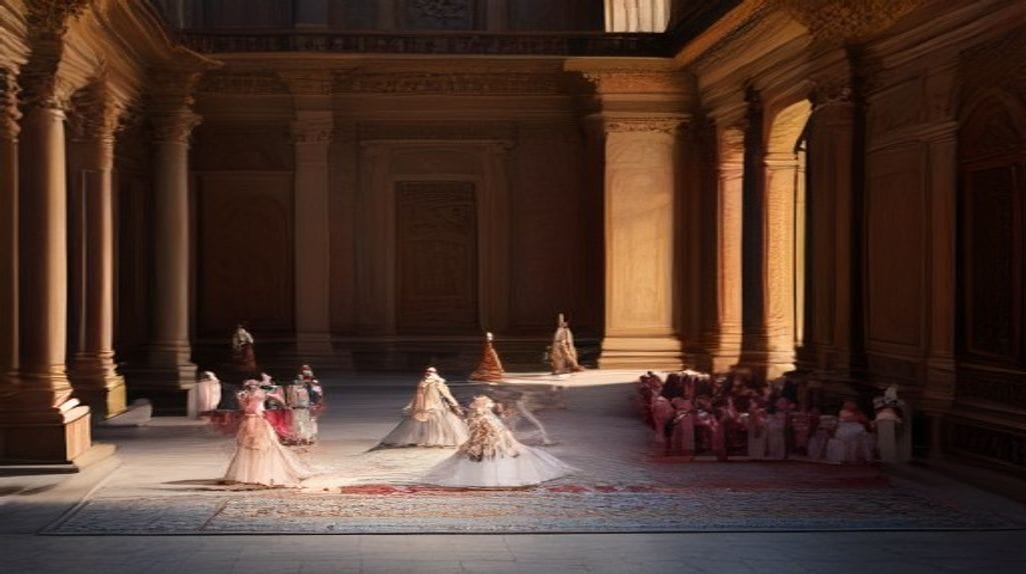
Weddings within palace circles were important instruments of dynastic representation. The marriages of sultans’ daughters were particularly significant in terms of family alliances and relations among members of the imperial elite. Ceremonies were planned according to palace protocol, while the status of guests and the gifts presented were carefully arranged. Marriage thus acquired political visibility extending well beyond private life.
Why were Ottoman weddings at the palace more lavish?
The palace possessed extensive material resources, and ceremonies provided an opportunity to display imperial splendor. Processions, banquets, fabrics, valuable objects, and gifts could therefore be especially magnificent. Yet not every palace wedding took place on the same scale. The scope of a ceremony varied according to the ruler’s preferences, the financial circumstances of the period, and the status of the person marrying.
In his work The Palace Organization of the Ottoman State, İsmail Hakkı Uzunçarşılı shows how closely the palace’s daily order was connected to ceremonial protocol. This hierarchy was clearly felt at weddings as well. Who stood where, which gifts were presented, and how the procession advanced all made social rank visible. For the relationship between palace culture and the arts, the article Ottoman sultans and the cultural legacy of art also provides useful background.
Preparation and Solidarity at Neighborhood Weddings
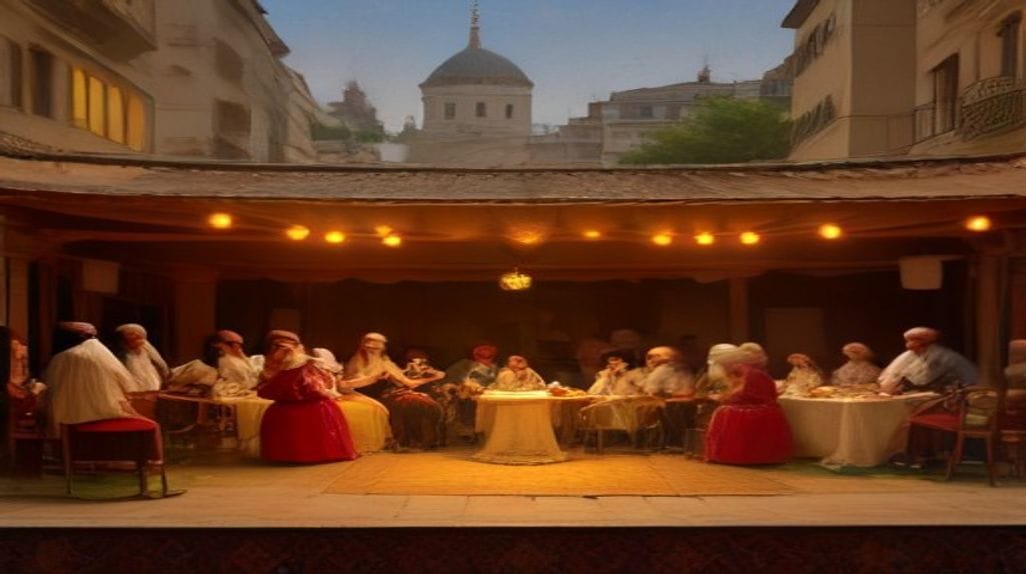
Weddings held in neighborhoods were not as costly as those at the palace, but they could be highly lively in terms of community participation. Neighbors might help with preparations, contribute to cooking, and take on responsibilities in organizing the ceremony. Relatives also shared the burden of the dowry, gifts, and refreshments. In this way, the wedding became a gathering at which local solidarity was made visible.
What did Ottoman weddings look like in the neighborhood?
There was no single standard form of neighborhood wedding. Traditions in Istanbul, Bursa, Edirne, Damascus, or Balkan cities were not identical. Muslim, Christian, and Jewish communities had their own religious and cultural practices. Nevertheless, food, music, visits, gifts, and the bride’s transition to her new household stood at the center of weddings in many communities.
At the same time, the neighborhood’s mechanisms of social oversight were also felt during the wedding process. A family’s reputation, level of indebtedness, and relations with neighbors could affect how the ceremony was perceived. In Ottoman urban society, the qadi and the court could play a role in resolving disputes arising from marriage when necessary. For this institutional framework, the article the duties of the Ottoman qadi and everyday court life provides useful context.
How Were Food, Music, and Entertainment Organized?
At Ottoman weddings, food was not merely refreshment but a key means of demonstrating the host’s generosity. Rice dishes, meat dishes, pastries, and sweets could be served according to regional resources. Palace banquets offered greater variety and more elaborate presentation. In neighborhoods, the family budget and contributions from neighbors determined the menu.
Music and entertainment were also important parts of the ceremony. Drums, zurnas, and various instruments could be used at outdoor celebrations, while different musical ensembles might perform in urban settings. Games, performances, and forms of entertainment also changed from one period to another. It is therefore misleading to imagine that there was a single “classic Ottoman wedding program.”
A common feature of Ottoman weddings was that they transformed a legal marriage into a celebration that made the union socially visible and memorable.
Miniatures and festival books depicting palace celebrations are important sources for understanding the richness of entertainment culture. Seyyid Vehbi’s Sûrnâme-i Vehbî is one of the principal works portraying early eighteenth-century palace festivities in both visual and literary form. Such works, however, primarily reflect the ceremonial world of elite circles. Court records and studies of everyday life provide a more balanced picture of neighborhood society.
What Did the Bridal Procession, Dowry, and Gifts Represent?
The bridal procession was one of the most visible stages through which a marriage was publicly announced. The bride’s departure from her family home and transition to a new household could take place ceremonially in the company of relatives and neighbors. The type of transport, clothing, and accompanying group varied by region. In palace circles, however, the protocol surrounding the procession was far more pronounced.
Why was the dowry important in Ottoman weddings?
The dowry contributed to the material foundations of the newly established household. Fabrics, clothing, bedding, household goods, and, depending on the family’s means, valuable objects could form part of the dowry. Among elite families in particular, displaying the dowry could become a marker of status. In more modest households, by contrast, practical items took priority.
Gift-giving also reinforced relationships of reciprocity. Relatives and guests might present money, fabrics, household goods, or other gifts. In palace circles, gifts could also indicate a person’s rank and closeness to the dynasty. In this respect, the wedding economy was not separate from the wider Ottoman world of trade and consumption; the article economy, trade, and administration under the Ottoman sultans broadens this context.
What Was the Legal Dimension of the Marriage Contract?
Under Islamic law, a marriage contract was established through the consent of the parties and fulfillment of the necessary legal conditions. The woman’s right to a mahr was an important element of the contract. A marriage contract did not necessarily have to be accompanied by a large wedding. Nevertheless, communal celebration helped ensure that the marriage became known within the community and made the relationship between the two families visible.
Ottoman qadi registers provide important information on marriage, mahr, maintenance, and divorce. It is incorrect to assume that every marriage contract was necessarily concluded in the presence of a qadi. Court records, however, became highly important when the parties sought legal protection. The relevant entries on marriage and weddings in the TDV Encyclopedia of Islam clearly explain this distinction between the legal and social dimensions.
Differences Between Palace and Neighborhood Weddings
The most obvious difference between palace and neighborhood weddings was their scale. At the palace, protocol, political representation, and expensive gifts were more visible. In neighborhoods, community assistance, family budgets, and local traditions played a greater role. At both levels, however, publicly announcing the marriage was one of the fundamental purposes of the celebration.
- Preparation: At the palace, officials and protocol took precedence, while in neighborhoods families and neighbors handled the work.
- Food: Palace celebrations featured richer banquets, while neighborhood menus were prepared according to available means.
- Entertainment: Professional performances could be more prominent at the palace, while local music and games prevailed in neighborhoods.
- Gifts: Rank and representation mattered at the palace, whereas solidarity was more evident in neighborhoods.
- Procession: Although processions appeared in both settings, palace processions were governed by stricter protocol.
The form of weddings also changed over time. Urbanization, patterns of consumption, palace fashions, and economic fluctuations all influenced ceremonies. In the nineteenth century, new forms of entertainment and European influences became more visible among elite circles. Even so, family, the marriage contract, gifts, and communal celebration remained central elements.
Conclusion
Ottoman weddings were diverse social ceremonies that differed from the palace to the neighborhood and cannot be reduced to a single model. At the palace, protocol and representation came to the fore, while in neighborhoods community ties, budget, and local traditions played a greater role. Nevertheless, food, music, gift-giving, dowries, and bridal processions formed a broad shared world of ritual. This diversity offers a valuable window into the social and cultural structure of Ottoman society.
Sources
- Suraiya Faroqhi, Ottoman Culture and Daily Life.
- İsmail Hakkı Uzunçarşılı, The Palace Organization of the Ottoman State.
- Seyyid Vehbi, Sûrnâme-i Vehbî.
- TDV Encyclopedia of Islam, Wedding entry.