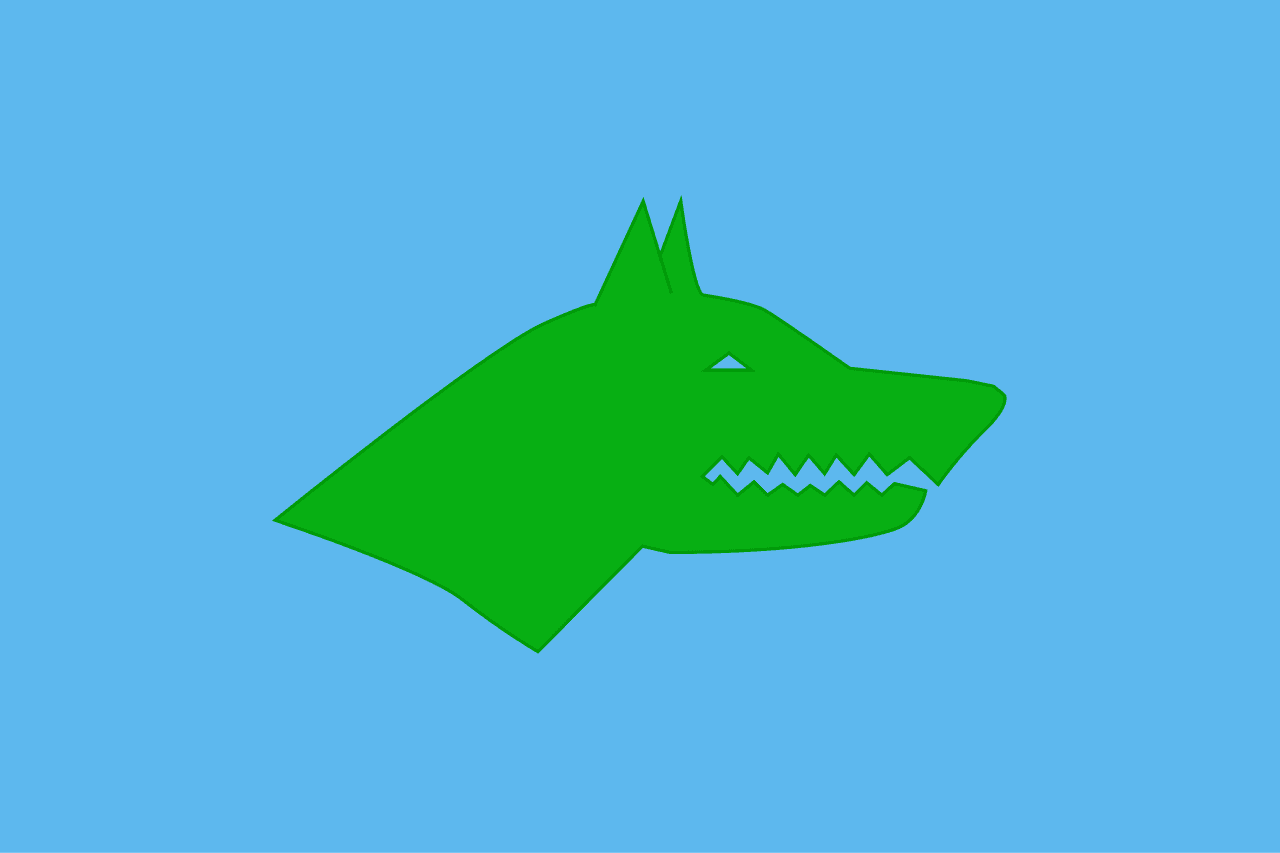
When people speak of the Göktürk flag today, what usually comes to mind is a design with a grey wolf’s head on a blue field. This design, however, is a modern interpretation. Chinese sources, on the other hand, record that a wolf-headed banner was planted in front of the khagans’ tent. In this article we separate historical information from modern interpretation and explain the subject with its sources.
Quick Summary
- The sources do not describe a single, standard national flag in today’s sense.
- According to Chinese sources, a wolf-headed banner stood in front of the khagan’s tent.
- According to the TDV Encyclopedia of Islam, in 582 the Chinese incited Tardu by sending him a wolf-headed banner.
- Ferdowsi, too, mentions “the wolf-headed banner of the Turanians” in the Shahnameh.
- Grey-wolf designs on a blue field are a product of the modern era.
Contents
- Definition
- The founding of the khaganate
- What do the sources say?
- The grey wolf symbol
- The tuğ and the banner
- The color of the flag
- Today’s designs
- Frequently asked questions
What Is the Göktürk Flag?
The Göktürk flag is a general name used for the banners and tuğs (horsetail standards) associated with the Turkic Khaganate. According to the TDV Encyclopedia of Islam, among the early Turks the tribes had their tamgas (brand marks), while rulers had tuğs representing their sovereignty. According to the encyclopedia, Chinese sources of this period contain a good deal of information about flags. The sources, however, do not describe a single, standard national flag made of cloth in today’s sense.
According to the encyclopedia, the states of antiquity generally used finials (alem) made of metal or some other hard material instead of cloth. The use of cloth flags became widespread in the Middle Ages. For this reason, early Turkic banners should not be equated with today’s flags. According to the encyclopedia, it is known that the Hunnic Empire also had tuğs and flags, but there is no detailed information. An old Christian source also mentions that Attila had a flag bearing the image of a legendary bird.
How Was the Turkic Khaganate Founded?
According to the TDV Encyclopedia of Islam, the Göktürks were the first community to use the name “Türk” as the official name of a state. At first they were vassals of the Rouran (Juan-Juan) and produced iron on the southern slopes of the Altai Mountains. According to the encyclopedia, Bumin destroyed the Rouran state, founded an independent state in 552 and took the title of İl Kağan. Under Mukan Kağan (553–572) its borders stretched from Korea in the east to the Black Sea in the west.
According to the encyclopedia, the conquests in the west were led by Mukan’s uncle İstemi Yabgu. In 567 İstemi Yabgu sent an embassy to Constantinople; this was the first embassy sent from Central Asia to Constantinople. It is also known that Taspar Kağan had a Buddhist temple built in the capital, Ötüken. In 582 the state split into eastern and western halves.
According to the encyclopedia, the eastern khaganate grew strong enough in 615 to besiege the Chinese emperor in the fortress of Yen-men. However, Chinese intrigues, the famine caused by the snow that fell in the summer of 627 and the breakdown of the töre (customary law) weakened the state. According to the encyclopedia, the eastern wing was destroyed by the Chinese in 630. In the western wing, T’ung Yabgu brought Kashmir and the Sogdian cities on the Silk Road under his rule. The khaganate later grew strong again in the period of the Second Eastern Turkic Khaganate.
The most important documents of this second period are the Orkhon inscriptions. According to the encyclopedia, the Kül Tigin inscription was erected in 732 and the Bilge Kağan inscription in 735, while the Tonyukuk inscription is dated to between 716 and 734. The inscriptions address the Turkic tribes and advise them not to be deceived by the sweet words of the Chinese.
According to the encyclopedia, thirty-eight letters are used in the two great Orkhon inscriptions. The inscriptions were first introduced to the scholarly world by Strahlenberg in 1730, and the letters were deciphered by the Danish linguist Vilhelm Thomsen. According to Thomsen, the Old Turkic script is of Aramaic-Iranian origin. The letters seen in today’s flag designs are taken from this alphabet.
What Do the Sources Say about the Flag?
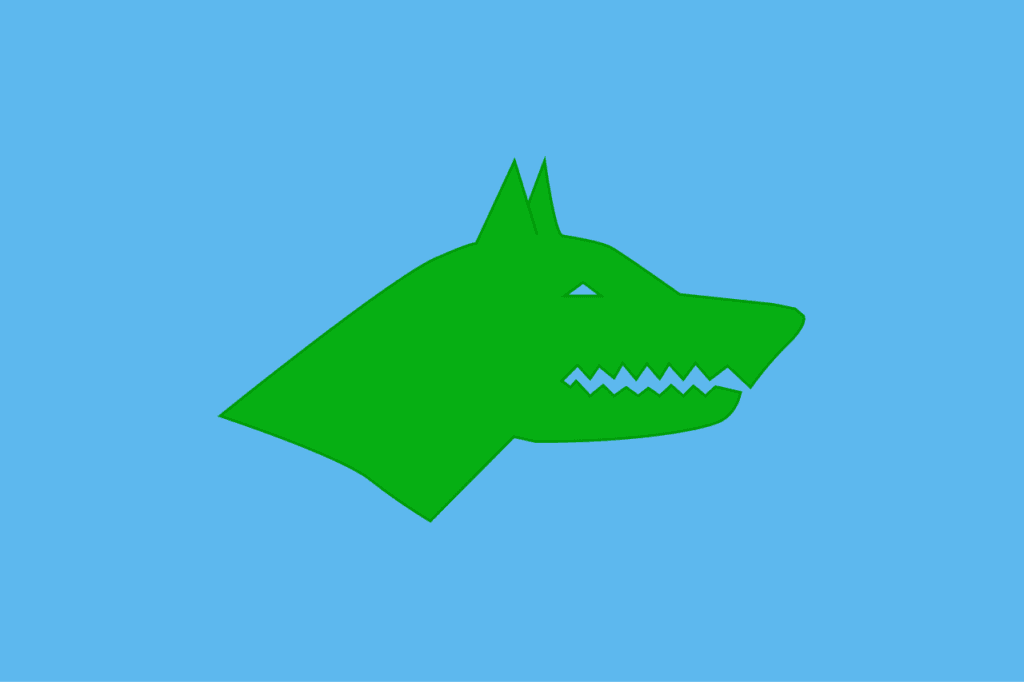
The strongest information about the Göktürk flag comes from Chinese sources. According to these sources, a wolf-headed banner was planted in front of the khagan’s tent, and golden wolf heads were placed on top of the banners. The wolf’s head was the symbol of the khagan’s sovereignty and lineage. This information appears in the Chinese dynastic histories that describe the Turkic Khaganate.
According to the TDV Encyclopedia of Islam, Tardu had begun to rule the western wing after his father İstemi. The Chinese incited him by sending him a wolf-headed banner. In 582 Tardu declared the independence of the Western Göktürk state. This event clearly shows that the wolf-headed banner was regarded as the symbol of an independent sovereignty.
According to the encyclopedia, the Chinese traveler Xuanzang (Hiuen-Tsang) saw soldiers carrying flags during a hunt of the Western Turkic ruler Şehu Kağan that served as a military maneuver. That Ferdowsi twice mentions “the wolf-headed banner of the Turanians” in the Shahnameh also confirms the Chinese sources. According to the encyclopedia, although it is understood that there was a flag cult in this period, little is known about its details.
Visual evidence also supports this information. According to the encyclopedia, one of the wall paintings of the Afrasiab palace in Samarkand, dated to the sixth–eighth centuries, shows eleven tuğs together with the red flag of the ruler in the center. In front of the tuğs stand drums decorated with horned masks. In another painting, a white tuğ tied to a red flag is planted on a horseman’s saddle.
Why Did the Grey Wolf Become a Symbol?
In early Turkic beliefs the wolf was regarded as the ancestor of the lineage and as a guide. According to an origin legend in Chinese sources, the khagan’s family, the Ashina, descended from a she-wolf. The wolf’s head was therefore a sign recalling the origin of the dynasty. We told the legend in our article on the Göktürk epic.
What Did the Tuğ and the Banner Mean?
According to the TDV Encyclopedia of Islam, the tuğ is a sign that carried the meaning of sovereignty and independence in Turkish history. The sources describe it as a spear-like emblem with a horse’s tail tied to its top and a gilded ball fitted on its tip. According to the encyclopedia, it was at first made from the tail of the yak, which was considered sacred, and later from a horse’s tail. In the dictionary of Mahmud al-Kashgari, the tuğ, the drum and the flag are counted as signs of independence.
According to the encyclopedia, the word bayrak (flag) comes from a root meaning “to plunge.” In the Dīwān Lughāt al-Turk, batrak is explained as a spear with a piece of silk attached to its tip. The word sancak (banner) is likewise derived from the root sanç-, meaning “to stick, to plunge.” According to the encyclopedia, in the eleventh century the emblem at the tip of the banner was made of red silk.
According to the encyclopedia, the Kutadgu Bilig says: “The sky thundered, it struck the nevbet tuğ; lightning flashed, it raised the khagan’s tuğ.” The expression “khan of nine tuğs” in Mahmud al-Kashgari’s work shows that khans had nine tuğs. This tradition continued in the Ottoman mehter band. The size of a mehter band was described as one, three, five, seven or nine kat (ranks) according to the number of its tuğs.
These signs did not belong to the ruler alone. According to the encyclopedia, tribal chiefs, state officials and military units also had flags of different colors and shapes. We also discussed the signs of rulership in our article on the titles of rulers.
What Color Was the Göktürk Flag?
The sources give no definite information about the color of the Göktürk flag. The sky blue used in today’s designs is a modern choice associated with the sanctity of the word “gök” (sky) and with the name “Kök Türk” in the inscriptions. According to the encyclopedia, the Kyrgyz had red or green flags, the Toquz Oghuz black flags and the Kipchak-Cumans red and white flags. This variety shows that there was no single flag color among the early Turkic tribes.
The ruler’s flag in the Afrasiab paintings, on the other hand, is depicted in red. According to the encyclopedia, the flags of the Karakhanid rulers were also made of an orange silk called al.
Are Today’s Designs Historical?
The grey-wolf-headed flags on a blue field used today are modern designs inspired by historical information. Some designs include phrases written in Orkhon letters, or tamgas, next to the wolf’s head. These interpretations are valuable as a cultural symbol, but they cannot be regarded as an exact historical flag. Images circulating under the name of the Göktürk flag should therefore be evaluated with care.
The tradition of the flag and the tuğ continued in later Turkic states as well. According to the encyclopedia, the Pechenegs had flags of various colors, and Ibn Rusta mentions the flags of the Khazars. This continuity shows how deeply rooted a place the banner held in Turkic political culture.
Frequently Asked Questions
Is the Göktürk flag real?
The sources mention wolf-headed banners and tuğs. Today’s blue flag design, however, is a modern interpretation.
Why is there a wolf on the Göktürk flag?
According to Chinese sources, there was a golden wolf’s head on the khagan’s banner. The khagan’s lineage was believed to descend from a she-wolf.
What is a tuğ?
According to the TDV Encyclopedia of Islam, it is a sign symbolizing sovereignty and independence. It resembles a spear with a horse’s tail tied to its top.
What is the wolf-headed banner?
According to Chinese sources, it is the banner planted in front of the khagan’s tent, with a golden wolf’s head on its top.
When was the khaganate founded?
According to the TDV Encyclopedia of Islam, Bumin destroyed the Rouran state and founded the independent state in 552.
Conclusion
In the historical sources, the Göktürk flag appears not as a national flag in today’s sense but as a wolf-headed banner and tuğ. Chinese sources and Ferdowsi confirm the existence of this banner. The wolf-headed banner sent to Tardu in 582 shows the symbol’s link with sovereignty. The blue designs known today as the Göktürk flag are modern interpretations inspired by this heritage.






2 thoughts on “Göktürk Flag”