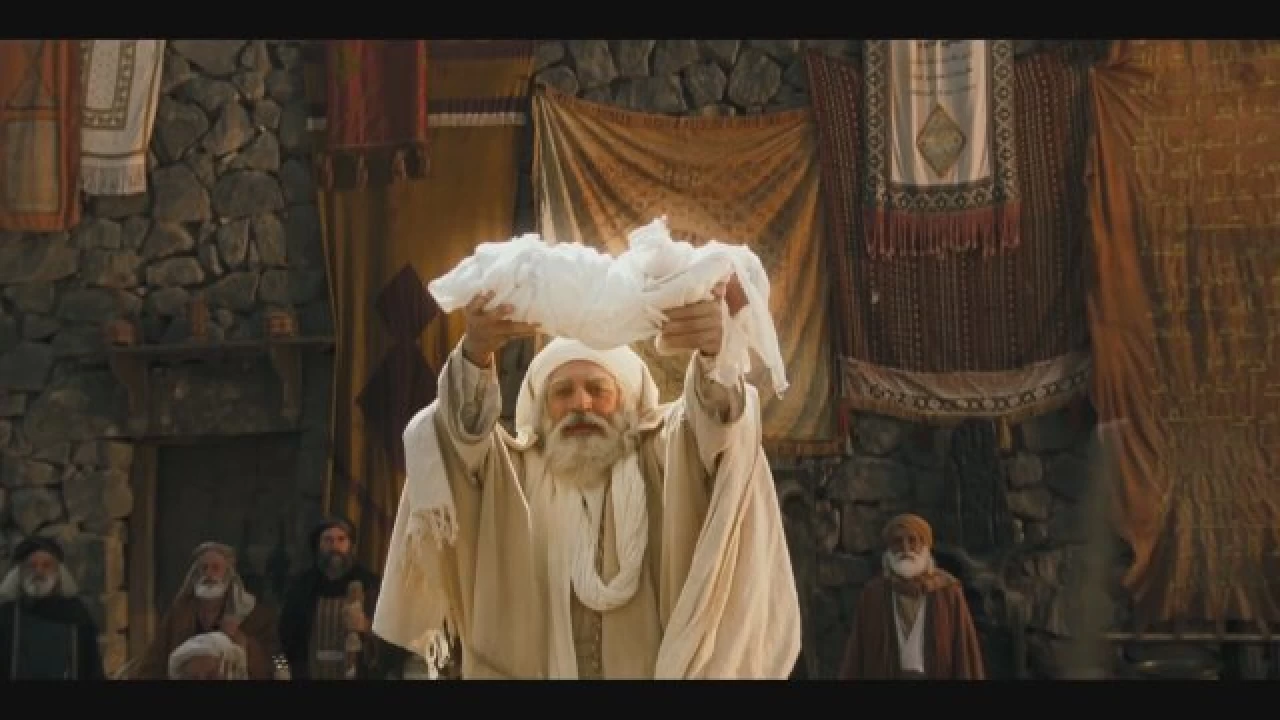
Abdul Muttalib ibn Hashim was the grandfather of the Prophet Muhammad and a respected chief of the Quraysh tribe in Mecca. His real name was Shayba, and he was born in Yathrib, today’s Medina. He is known for bringing the long-buried Zamzam Well back to light, for his meeting with Abraha during the Event of the Elephant and for protecting his orphaned grandson.
Quick Summary
- His real name was Shayba; his father was Hashim and his mother was Salma of Medina.
- The name he is known by arose from a misunderstanding involving his uncle al-Muttalib, who brought him to Mecca.
- Following a dream, he rediscovered the Zamzam Well, which the Jurhum had buried.
- During the Event of the Elephant he asked Abraha only for his camels and said that the Kaaba’s Lord would protect it.
- According to tradition he died in Mecca at the age of eighty-two, leaving the care of his grandson to his son Abu Talib.
Contents
- Who was he?
- His father Hashim and the trade of the Quraysh
- The story of his name
- The rediscovery of the Zamzam Well
- The vow and his son Abdullah
- The Event of the Elephant
- Protecting his grandson, and his death
- Frequently asked questions
Who Was Abdul Muttalib ibn Hashim?
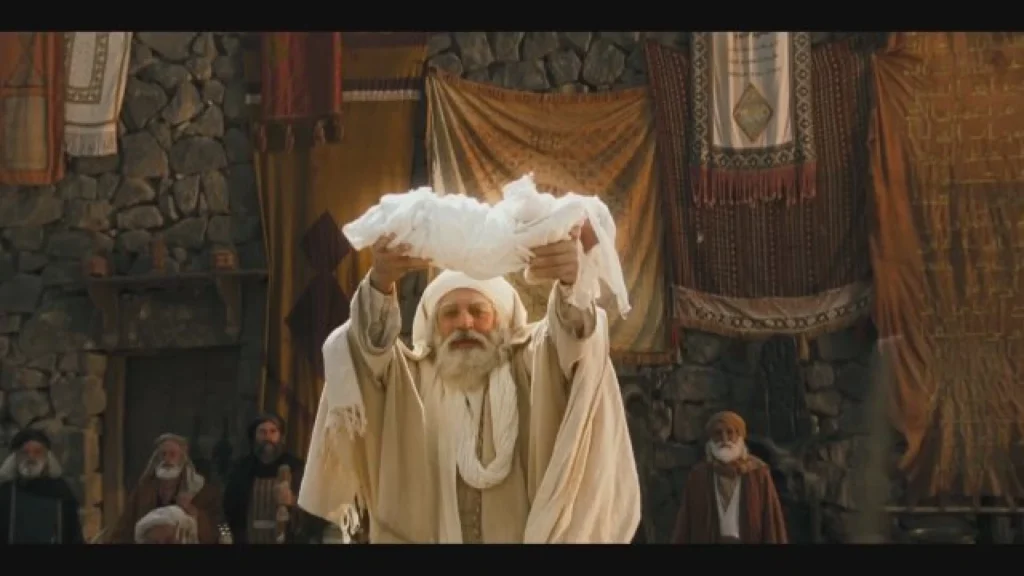
According to the TDV Encyclopedia of Islam, Shayba was born in Yathrib. His father, Hashim, was one of the notables of the Quraysh, and his mother, Salma, belonged to the Banu Najjar of Medina. Because his father died in Gaza during a trading journey, he spent the first years of his childhood with his mother in Yathrib.
When he was eight, his uncle al-Muttalib took him to Mecca and raised him. According to the encyclopedia, shortly before his death al-Muttalib handed the leadership of the clan over to his nephew, saying, “You are worthy of your father’s place.” Thus the young Shayba came to head one of the most respected families in Mecca.
His Father Hashim and the Trade of the Quraysh
The family’s standing in Mecca goes back to Qusayy, the Prophet’s fourth-generation ancestor on his father’s side. According to the entry Qusayy ibn Kilab in the TDV Encyclopedia of Islam, in 440 Qusayy had a meeting place called Dar al-Nadwa built north of the Kaaba. He gathered into his own hands all the offices connected with the Kaaba and Mecca: qiyada, liwa, hijaba, nadwa, siqaya and rifada. Of these, siqaya was the duty of providing water to the pilgrims, and rifada the duty of providing them with food.
After Qusayy, the family’s prestige rested largely on Hashim. According to the TDV Encyclopedia of Islam, Hashim’s real name was Amr. In a year of famine he broke up bread he had brought from Syria, made a broth with meat stock and distributed it to the pilgrims, which is why he became known by the nickname Hashim, meaning “the one who breaks, the one who crumbles.”
On behalf of the Quraysh, Hashim established trade relations with the Sasanians, the Himyarites and the Abyssinians. According to the encyclopedia, he reached agreements with the Byzantine Emperor Leo I and the Ghassanid ruler, allowing the Quraysh to trade freely in those lands. The two great caravans of the Quraysh, to Yemen and Abyssinia in winter and to Syria and Anatolia in summer, became a custom in his time.
Hashim had also taken on the duties of providing food and water to the pilgrims. He had two large wells, Bazr and Sajla, dug in Mecca. On a trading journey he married Salma of the Banu Najjar, with whom he had stayed as a guest in Yathrib. Shayba was born of this marriage.
Hashim’s growing influence also stirred jealousy within the family. According to the encyclopedia, Umayya, the son of his brother Abd Shams, challenged him to a contest of boasting about lineage and honour. Having lost the contest, Umayya had to give fifty camels and live in Damascus for ten years, under the conditions agreed in advance. This episode is regarded as one of the first links in the long rivalry between the Banu Hashim and the Banu Umayya.
The Story of the Name Abdul Muttalib
According to the encyclopedia, when al-Muttalib entered Mecca with his nephew riding behind him, the people took the boy for his slave. For this reason they called him “abd al-Muttalib,” meaning “the slave of al-Muttalib.” From that day on, Shayba came to be known by this name.
According to another account, when he was asked who the boy was, al-Muttalib introduced his nephew, whose clothes were rather shabby, as his slave for the moment. In both accounts the name is the product of a misunderstanding or of an off-the-cuff answer. Over time, however, this name became the name of one of the most respected chiefs in Mecca.
The Rediscovery of the Zamzam Well
The Zamzam Well lies opposite the Black Stone, about 19 metres from the Kaaba. According to the encyclopedia, the name of the well is associated with the word zamzam, which carries meanings such as “abundant and flowing.” According to the TDV Encyclopedia of Islam, the Jurhum, on leaving Mecca, had filled in the well and made its location impossible to trace. Over the centuries floodwaters passed over it, and the well was completely covered.
According to tradition, Shayba was commanded in a dream to dig Zamzam near an ant nest. This spot lay between the idols Isaf and Na’ila, which the Meccans used as their place of sacrifice. Although the Quraysh objected, he kept digging and found the well. According to the encyclopedia, he took the well into his own possession and thus obtained the duty of distributing water to the pilgrims, the siqaya.
The encyclopedia also relates that he milked his camels, mixed the milk with honey and distributed it to the pilgrims together with Zamzam water. Since then, Zamzam has been an inseparable part of the Hajj and Umrah pilgrimages.
The Vow and His Son Abdullah
In the years when he dug Zamzam, he had no son other than al-Harith and struggled to defend himself against the pressure of the Quraysh. According to the encyclopedia, he therefore vowed that if he had ten sons, he would sacrifice one of them. In time, ten sons were born to him from his five wives.
When, after a dream, he wished to fulfil his vow, lots were drawn among his sons. The lot fell on Abdullah, the father of the Prophet. However, a hundred camels, a number also determined by lot, were sacrificed in Abdullah’s place. This episode is one of the most frequently told family stories in the sira sources.
The Event of the Elephant
The event described in Surat al-Fil of the Quran is one of the best-known moments of his life. According to the TDV Encyclopedia of Islam, Abraha, the Yemen governor of the Abyssinian kingdom who had seized power in 537, had built a great church in Sana’a. Seeing that the Arabs went to the Kaaba for pilgrimage, Abraha marched on Mecca intending to destroy the Kaaba. Because there was an elephant at the head of the army, the event is known as the “Event of the Elephant.” According to most sources there was a single elephant named Mahmud in the army, although some accounts speak of more elephants.
When the army camped at al-Mughammas near Mecca, the guide named Abu Righal who had shown Abraha the way died; the Arabs later made it a custom to stone his grave. Abraha’s soldiers, meanwhile, seized the camels grazing around Mecca. According to the encyclopedia, among them were two hundred camels belonging to the chief of the Quraysh. When Abraha announced that he only wished to destroy the Kaaba, Abdul Muttalib, as chief of the Quraysh, went to meet him and asked only for his camels. As for the Kaaba, he reminded Abraha that its Lord would surely protect it.
The date of the event is disputed in the sources. According to the encyclopedia, the common belief is that it took place shortly before the birth of the Prophet; depending on the calculation, this date corresponds to 569, 570 or 571. The video below, which tells of the Prophet’s lineage and ancestors, also touches on this period.
Protecting His Grandson, and His Death
His son Abdullah had died before Muhammad was born. According to the TDV Encyclopedia of Islam, the grandfather, Abdul Muttalib, showed great care for his grandson during his lifetime. Before his death, he entrusted the care of his grandson to his son Abu Talib.
The encyclopedia describes him as a chief of excellent character, a man of faith and a just leader. It is related that towards the end of his life he gave up worshipping idols and drinking wine, and that he forbade circumambulating the Kaaba naked. It is also reported that he believed in God and the hereafter, and that from time to time he withdrew to the cave of Hira to worship.
According to the common account, he died in Mecca at the age of eighty-two and was buried in Jannat al-Mu’alla next to the grave of his great-grandfather Qusayy. After his death the people of Mecca went into mourning, and the shops stayed closed for days. According to the encyclopedia, with his death the power of the Banu Hashim declined, and the Banu Umayya gained the upper hand for a time. Harb ibn Umayya became chief of the Quraysh; of the offices connected with the Kaaba, only the duty of distributing water remained with his son al-Abbas.
Among his sons were figures who left their mark on Islamic history, such as Abdullah, Abu Talib, Hamza, al-Abbas and Abu Lahab. We explained which of them became Muslims in our article on the Prophet Muhammad’s uncles who became Muslim. The story of the dynasty descended from al-Abbas is told in our article on the Abbasid era.
Frequently Asked Questions
Who was Abdul Muttalib ibn Hashim?
He was the grandfather of the Prophet Muhammad and the chief of the Quraysh tribe in Mecca. His real name was Shayba; he is known for rediscovering the Zamzam Well.
What was his real name?
His real name was Shayba; his father was Hashim and his mother was Salma. He received the name he is known by when his uncle al-Muttalib brought him to Mecca and the people took him for al-Muttalib’s slave.
Who rediscovered the Zamzam Well?
The Prophet’s grandfather, following a dream, dug out again the Zamzam Well that the Jurhum had buried. In this way the duty of distributing water to the pilgrims passed to his family.
Who were the children of Abdul Muttalib ibn Hashim?
He had ten sons from his five wives. Among them were Abdullah, Abu Talib, Hamza, al-Abbas and Abu Lahab.
Conclusion
Abdul Muttalib ibn Hashim was one of the most respected chiefs of the Quraysh in pre-Islamic Mecca. His rediscovery of the Zamzam Well, his stance during the Event of the Elephant and his care for his orphaned grandson made him one of the important figures of the sira sources. His descendants include both the Prophet’s family and the Abbasid dynasty of later centuries.
Sources
- TDV Encyclopedia of Islam, entry “Abdülmuttalib” (Abd al-Muttalib)
- TDV Encyclopedia of Islam, entry “Hâşim b. Abdümenâf” (Hashim ibn Abd Manaf)
- TDV Encyclopedia of Islam, entry “Zemzem” (Zamzam)
- TDV Encyclopedia of Islam, entry “Fil Vak‘ası” (Event of the Elephant)
- Ibn Hisham, al-Sira al-Nabawiyya [The Life of the Prophet].




1 thought on “Abdul Muttalib ibn Hashim”