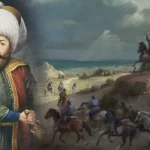
The Ottoman Empire was founded in 1299 by Osman Gazi and endured until 1922. Throughout this period, many sultans took on the role of ruler across different eras, each shaping the empire in distinct ways. The governance philosophies, military strategies, and social policies of the Ottoman sultans had a direct impact on the empire’s rise and eventual fall.
Sultans of the Rise Era
The sultans who left their mark on the Ottoman Empire’s rise are known for their strategic conquests and innovative approaches to governance. Notable achievements of the sultans from this era include the following:
Osman Gazi
Osman Gazi, as the founder of the empire, laid the foundations of the Ottoman state. He played a unifying role among the small principalities and expanded his territory through conquest.
Orhan Gazi
Orhan Gazi conquered Bursa and made it the capital, taking important steps in relations with the Byzantines. He also established the first regular army, strengthening the empire’s military power.
Mehmed the Conqueror
Mehmed the Conqueror captured Istanbul, building a bridge between East and West and consolidating the empire’s power. This conquest marked a turning point for the Ottoman Empire.

Sultans of the Decline Era
The Ottoman Empire’s decline was shaped by the weak governance of many sultans and mounting external pressures. The influence of the sultans during this period accelerated the empire’s collapse.
Selim III
Selim III strove to carry out innovative reforms but faced opposition both at home and abroad. The strengthening of the Janissary Corps rendered his reforms ineffective.
You may also be interested in Ottoman Expansion During the Reign of Orhan Gazi.
Mahmud II
Mahmud II continued reform movements in the 19th century, but in the process he went through a difficult period marked by the abolition of the Janissaries and interventions by European powers. His reforms were part of the empire’s broader modernization efforts.
Abdülhamid II
Abdülhamid II adopted an absolutist approach to governance, which led to discontent among the population. External pressures and internal uprisings accelerated the empire’s weakening.
Conclusion
The Ottoman sultans played crucial roles throughout the empire’s history, developing different strategies and governance philosophies during periods of rise and decline. Each sultan’s unique achievements and mistakes, specific to their era, shaped the fate of the Ottoman Empire. The leadership qualities, military successes, and reform efforts of these sultans are essential to understanding how the empire took shape and ultimately why it collapsed.