Throughout history, the Ottoman Empire was a state that ruled over a vast geography, bringing together many different cultures and nations. The impact of this great empire on administration, economy, and trade was directly related to the vision and strategies of the Ottoman sultans. In this article, we will examine the approaches of Ottoman sultans to economy, trade, and imperial administration.
The Economy of the Ottoman Empire
The economic structure of the Ottoman Empire was built upon agriculture, trade, and craftsmanship. Agriculture was the empire’s primary economic resource, carried out largely on fertile lands worked by peasants. Ottoman sultans provided various reforms and incentives to increase agricultural production. For instance, through regulations made in the tax system, they aimed to improve the conditions of farmers.
In addition, thanks to its strategic geographic location, the Ottoman Empire sat at the intersection of important trade routes. Routes opening onto the Black Sea, the Mediterranean, and the Middle East allowed trade to flourish. By controlling these trade routes, the sultans aimed both to increase state revenues and to support the development of international trade.
The Development of Trade and the Role of Merchants
Ottoman sultans provided various regulations and conveniences to encourage trade. To improve the working conditions of merchants, they lowered customs duties and built caravanserais to ensure the safety of trade. These caravanserais were places where merchants could safely store their goods and rest.
Furthermore, the Ottoman Empire developed various guild systems to strengthen its own domestic market. This system allowed craftsmen and merchants to organize within a specific trade branch. By supervising these guilds, the sultans ensured quality control and sought to prevent unfair competition.
You may also be interested in Ottoman Expansion During the Reign of Orhan Gazi.
Imperial Administration and Central Authority
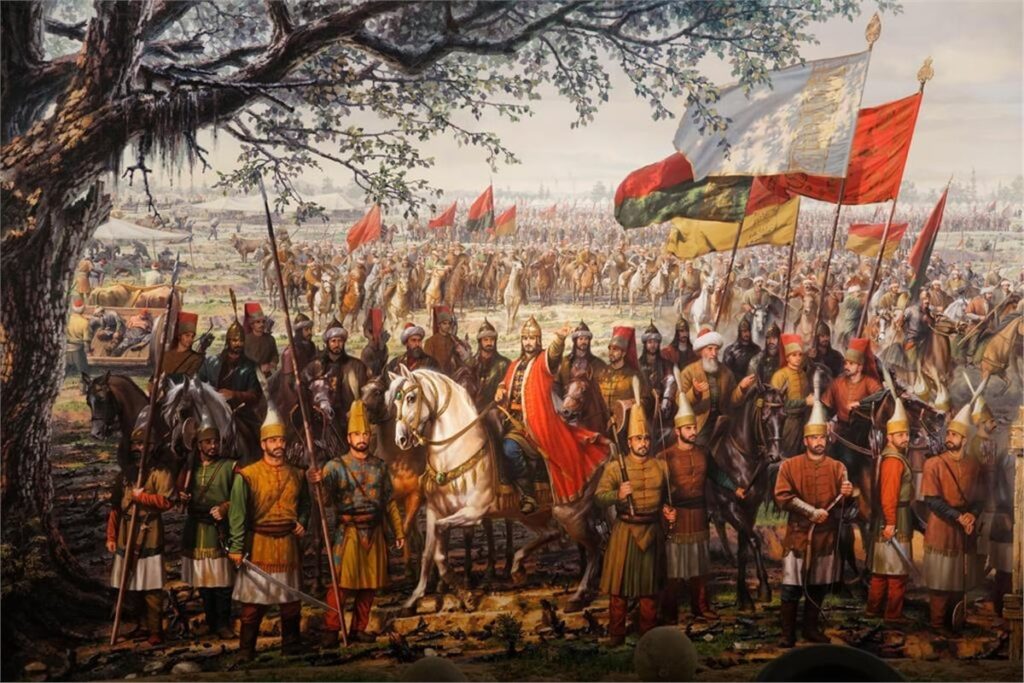
The administrative structure of the Ottoman Empire was built upon a system with a strong central authority. The sultans held absolute authority over all areas of state administration. This situation allowed different cultures and nations to coexist across the empire’s vast territories.
Ottoman sultans relied on officials such as the grand vizier and provincial governors (beylerbeyi) to administer the provinces. These administrators managed relations with the local population while also representing the sultan’s authority. The effectiveness of local administrations was of critical importance to the empire’s overall stability.
Conclusion
Through their strategies regarding economy, trade, and imperial administration, the Ottoman sultans ensured the long-term survival of the empire. Supporting agriculture, encouraging trade, and strengthening central authority contributed to the development of the Ottoman Empire not only economically but also socially and culturally. These elements made the Ottoman Empire an effective power throughout history.