The Imperial Council was the highest governing council in the Ottoman State, where affairs of state were discussed on behalf of the sultan and decisions were made on law, finance, military order, diplomacy, and administration; with its members, it was the institution that connected central authority to the provinces and represented the intellect and decision-making mechanism of imperial government.
Contents
- What Was the Imperial Council?
- Centralization in Ottoman Government
- Council Members and Their Duties
- How Did the Decision-Making Process Work?
- Change Across Periods
- Conclusion
)
What Was the Imperial Council?
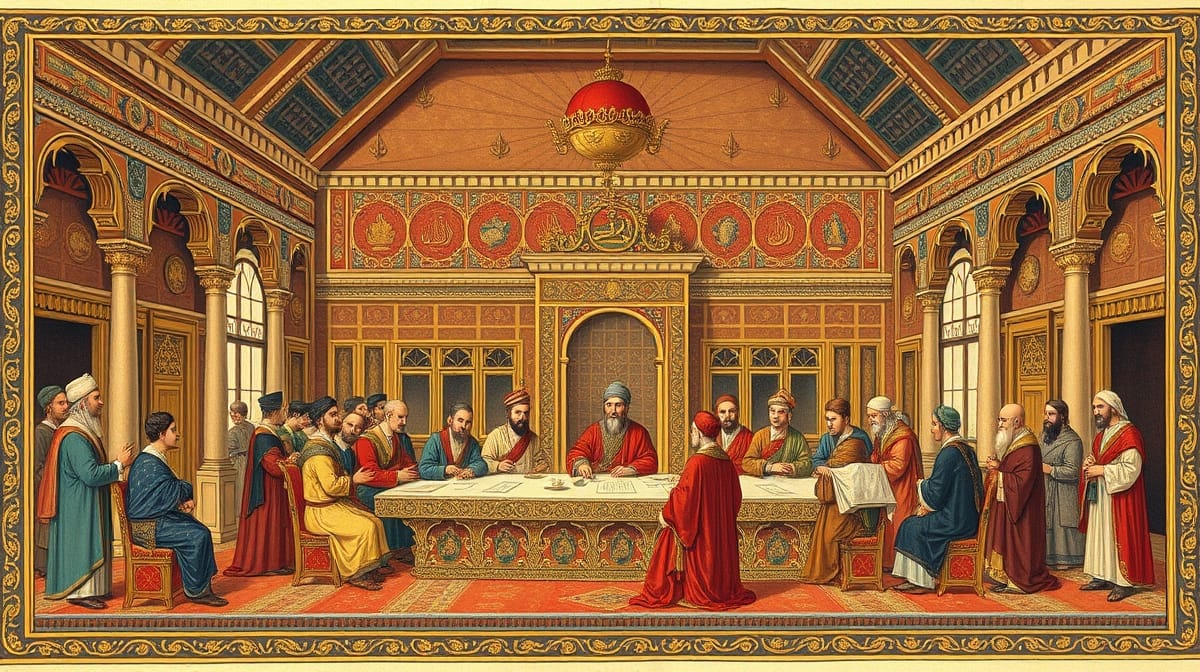
In the Ottoman state organization, the Imperial Council was not merely an advisory body but also a central institution that brought together executive, judicial, and supervisory functions. Literally meaning “the exalted council belonging to the sovereign,” this body was the place where the most important affairs of state were discussed in classical Ottoman administration. Decisions on war and peace, complaints from the provinces, financial regulations, timar allocations, diplomatic correspondence, and high-ranking legal cases were handled here.
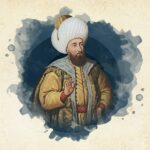
According to Halil İnalcık, the foundation of the Ottoman understanding of government lay in the balance established between the sultan’s absolute authority and law, custom, and sharia. This balance found much of its concrete form in council meetings at the palace and the state center. Decisions of the council were made on behalf of the sultan; however, the sultan did not always have to be present in person. Especially from the reign of Mehmed II onward, it became common for the sultan to listen to meetings from behind a screen while the grand vizier assumed de facto chairmanship.
To understand the importance of this institution, one should not imagine the Ottoman Empire simply as a state governed by the personal will of the sultan. Of course, the sultan was the highest authority; yet the empire’s vast geography, diverse societies, and complex fiscal-administrative structure made a regular decision-making mechanism necessary. For this reason, the roles of the Ottoman sultans in state governance should be considered together with the council system.
Centralization in Ottoman Government
From its foundation, the Ottoman State developed a political structure that sought to strengthen central authority. In the transition from principality to empire, administrative organization was as decisive as military success in making those achievements lasting. Advisory bodies gathered around the sultan in the early period gradually acquired a more institutional character. Thus, the council became the central brain of the state.
Central government in the Ottoman Empire was a complex system in which the palace, the scribal bureaucracy, the military-administrative class, and the learned hierarchy functioned together. The seyfiye represented military and administrative duties, the ilmiye the fields of law and education, and the kalemiye the order of correspondence and financial records. There was both direct competition and division of labor among these classes. Council meetings were one of the arenas where these different fields of expertise came together under the authority of the sultan.
The provincial order of the state was also tied to this center. Beylerbeys, sanjak beys, kadis, defterdars, and timar holders served in different regions; however, ultimate supervision was concentrated at the center. In particular, the timar system was one of the fundamental mechanisms that strengthened the link between the military and economic structure and the central administration. Timar records, revenue distribution, and dirlik arrangements were among the matters with which the council dealt.
In Ottoman government, the council should be seen as one of the main institutions that ensured the sultan’s will was implemented not arbitrarily, but within a recorded, consultative, and bureaucratic system.
Council Members and Their Duties
Members of the Imperial Council consisted of high officials representing different areas of the state. Each member had a specific field of expertise and evaluated matters related to that field during meetings. As İsmail Hakkı Uzunçarşılı’s studies on the Ottoman central organization show, council members in the classical period were not merely symbolic figures; they played a decisive role in the real functioning of the bureaucracy.
The Grand Vizier and the Presidency of the Imperial Council
The grand vizier was the most powerful administrator in the state after the sultan. Initially the leading figure among the viziers, he eventually rose to the position of the sultan’s absolute deputy. He presided over council meetings, followed up on the implementation of decisions, and ensured coordination among state officials. The seal carried by the grand vizier symbolized his authority to act on behalf of the sultan.
After the reign of Mehmed II, the position of the grand vizier grew even stronger. The sultan’s absence from visible participation in the council placed the grand vizier at the center of daily administration. This situation did not so much diminish the sultan’s authority as enable greater specialization in government. Indeed, during the reign of Suleiman the Magnificent, the burden on the central administration increased as the empire expanded,and the office of grand vizier became more effective. In this context, the reign of Suleiman the Magnificent is noteworthy for the maturation of the council tradition.
Kazaskers: Law and the Learned Hierarchy within the Imperial Council
The kazaskers were among the most important representatives of the ilmiye class in the council. There were two principal officeholders: the kazaskers of Rumelia and Anatolia. They dealt with the appointments of kadis and madrasah professors, offered opinions in high-ranking legal cases, and connected the administration of justice to the center. The combined application of sharia and customary law in the Ottoman legal system made the role of the kazaskers even more important.
As Mehmet İpşirli emphasizes in his assessments of Ottoman institutions in the TDV Encyclopedia of Islam, legal discussions in the council were not merely theoretical debates. Petitions from the provinces, appeals against kadi rulings, waqf matters, and official appointments could be addressed in this assembly. In this way, the center gained the ability to supervise the legal order.
Defterdars and Financial Administration
Defterdars were responsible for the state’s income and expenditure order. Treasury records, tax revenues, salary payments, timar revenues, and financial inspections fell within their area of duty. While the chief defterdar was especially influential over Rumelian finances, the Anatolian defterdar handled matters related to Anatolian revenues. Ottoman finance rested on an extensive culture of record-keeping; therefore, defterdars were critical figures both fiscally and bureaucratically.
The Ottoman Empire’s ability to become a long-lived empire depended in important measure on its capacity to collect taxes regularly, maintain soldiers, and keep provincial revenues under control. In this framework, the council functioned not only as a decision-making body but also as an institution that monitored sources of revenue and protected the material foundations of the state.
[IMAGE: 2]
The Nişancı and Bureaucratic Memory
The nişancı was the official who drew the sultan’s tuğra and supervised the state’s official correspondence system. Law codes, patents, imperial edicts, and land records fell within the nişancı’s field of expertise. For this reason, the nişancı represented the legal and bureaucratic memory of Ottoman administration. The transformation of a decision into a state document often depended on the orderly work of the scribal offices and the nişancı institution.
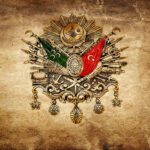
The Ottoman tuğra was not merely an aesthetic symbol but also a sign of sovereignty. In this respect, the meaning of the Ottoman tuğra is important for understanding the authority of documents produced in the council. The presence of the tuğra on an imperial edict showed its connection to the sultan’s will.
The Kapudan Pasha and the Agha of the Janissaries
The kapudan pasha was the official at the head of the naval forces; however, he was not always considered a permanent member of the council and would attend meetings especially on matters related to the fleet. As the Ottomans gained power in the Mediterranean, naval affairs acquired greater importance in central government. Victories such as Preveza showed that the navy had not only military but also diplomatic and economic consequences. In this respect, the Battle of Preveza is a good example for understanding the weight of sea power in state governance.
The agha of the Janissaries could attend the council on matters related to the kapıkulu troops. The Janissaries held great importance in the classical period as the sultan’s central army. Over time, however, this military class’s intervention in politics created serious problems for central authority. The duties and transformation of the Janissaries is a complementary topic for understanding the military dimension of Ottoman administration.
How Did the Decision-Making Process Work?
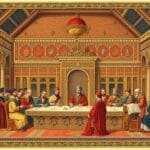
Council meetings were held on designated days, and petitions, complaints, and state matters were discussed in order. Meetings generally took place in the section of Topkapı Palace known as the Kubbealtı. This name also became identified with the architectural setting of the council. Officials, ambassadors, complainants, or representatives from various regions of the state could be heard there, and matters could be referred to the relevant official.
The most important point in the decision-making process was that the council worked on behalf of the sultan. The ultimate authority over the matters discussed was the sultan. The grand vizier and the other members evaluated the issue, prepared an appropriate draft decision, and obtained the sultan’s approval when necessary. Major military campaigns, diplomatic treaties, and high-level state appointments in particular became final through the sultan’s will.
The council’s judicial function is also notable. Members of the public, members of the military-administrative class, or provincial officials could apply to the center. This practice strengthened the sultan’s role as the “dispenser of justice” in Ottoman government. Of course, not every petition was resolved directly; nevertheless, the possibility of appealing to the center created supervisory pressure on provincial administrators.
The implementation of decisions was ensured through the orderly record system of the scribal bureaucracy. The mühimme registers, in which important decisions made in the council were recorded, are among the most valuable sources in Ottoman administrative history. Thanks to these registers, detailed information can be obtained about campaign preparations, provincial correspondence, tax regulations, and diplomatic affairs.
Change Across Periods
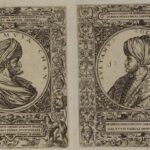
The Imperial Council did not function in the same way throughout every period of Ottoman history. While the sultan’s direct influence in government was more pronounced during the foundation and expansion periods, institutionalization increased in the classical age. The law codes of Mehmed II are regarded among the important texts that defined the boundaries of the central organization. In this period, the sultan’s withdrawal from the council and the rise of the grand vizier show the evolution of government from personal rule toward a bureaucratic order.
In the sixteenth century, the council system matured, and the Ottoman State became a great empire. From the seventeenth century onward, however, as the state’s military, fiscal, and political problems increased, the functions of the council also changed. The residences of the grand viziers and the Sublime Porte gradually became more effective. Thus, the center of gravity in state administration shifted from the Kubbealtı inside the palace toward the bureaucracy of the grand vizierate.
This transformation does not mean that the institution suddenly disappeared. On the contrary, Ottoman administration tended not to demolish older institutions completely but to adapt them to new conditions. In the eighteenth and nineteenth centuries, modernization steps created a new administrative structure through councils and ministries. During the era of the Tanzimat and Islahat reform edicts, more modern bureaucratic institutions, different from the classical council order, had come to the fore.
[IMAGE: 3]
The Council’s Place in the Logic of Ottoman Government
To understand how the Ottoman State was governed, three basic elements must be considered together: the authority of the sultan, the legal-legitimate order, and bureaucratic practice. The council stood at the intersection of these three elements. The sultan’s will was transformed into state policy here, while jurists and bureaucrats made that will applicable.
This structure is one of the factors that explains how the Ottoman Empire was able to govern different religious, ethnic, and regional communities for a long time. Of course, the system was not flawless; at times, bribery, struggles for influence, military pressure, and fiscal crises weakened administration. Yet in the classical period, the council played an important role in providing the coordination needed to govern the empire’s vast geography.
Caroline Finkel, in assessing Ottoman history, explains the state’s success not only through conquests but also through its capacity to govern conquered lands. At the center of this capacity were mechanisms of record-keeping, appointment, supervision, and justice. The council was one of the most visible and effective centers of these mechanisms.
Conclusion
The Imperial Council is a key institution for understanding the governing logic of the Ottoman State; by combining the authority of the sultan with specialized officials such as the grand vizier, kazasker, defterdar, and nişancı, it shaped imperial administration for centuries as the central decision-making mechanism that regulated military, financial, legal, and diplomatic affairs.
Sources
- Halil İnalcık, The Ottoman Empire: The Classical Age.
- İsmail Hakkı Uzunçarşılı, The Central and Naval Organization of the Ottoman State.
- Mehmet İpşirli, Entries on Ottoman Institutions in the TDV Encyclopedia of Islam.
- Caroline Finkel, Osman’s Dream.
- Halil İnalcık and Donald Quataert, An Economic and Social History of the Ottoman Empire.