Throughout history, trade routes have been among the most important factors determining the economic power of states. In particular, trade networks between East and West enabled great empires to grow wealthy. Among these routes, one of the most notable was the Spice Route. States that controlled the spice trade generated large revenues, became trade centers, and increased their political power.
The answer to the frequently asked history question “the state that grew economically strong by controlling the Spice Route” is usually given as the Ottoman Empire. In addition, the Mamluks and some other Islamic states also gained economic power thanks to the Spice Route.
What Is the Spice Route?
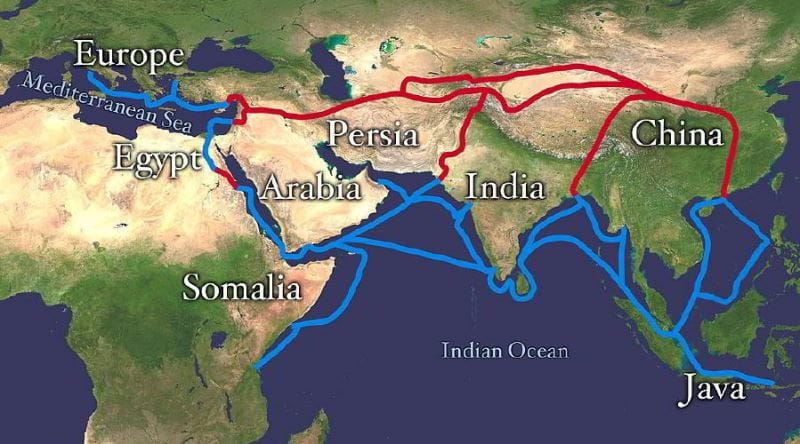
The Spice Route was a major trade route that began in India and Southeast Asia and extended through the Middle East to Europe. Thanks to this route:
- Black pepper
- Cinnamon
- Ginger
- Cloves
- Nutmeg
- Silk and other valuable goods
were transported to Western countries.
Spices were extremely valuable in Medieval Europe. For this reason, the states that controlled the Spice Route generated high revenues.
States That Controlled the Spice Route
Throughout history, many states sought to have a say in Spice Route trade. In particular:
- The Mamluk State
- The Ottoman Empire
- The Abbasids
- The Umayyads
- Indian kingdoms
held important positions within this trade network.
After conquering Egypt, the Ottoman Empire took control of a large part of the Spice Route. As a result, trade revenues increased significantly.
How Did the Ottoman Empire Profit from the Spice Route?
The Ottoman Empire generated substantial economic income by controlling the ports, caravan routes, and trade centers along the Spice Route.
This revenue came from:
- Customs duties
- Port revenues
- Trade fees
- Caravan transit fees
among other sources.
Cairo, Aleppo, and Istanbul in particular became major trade centers.
Why Was the Spice Route So Important?
In the Middle Ages, spices were not only used in food. They were also of great value in:
- Medicine making
- Preserving meat
- Perfume production
- Palace kitchens
For this reason, European states paid large sums to obtain spice products. This situation enabled the states that controlled trade routes to grow wealthy.
The Impact of Spice Route Trade on Europe
The impact of the Spice Route on Europe was quite significant. European states wanted to reach eastern goods more quickly. For this reason, they began searching for new sea routes.
The Spice Route had a major influence on the start of the Age of Discovery. In particular, Portugal and Spain organized maritime expeditions in search of new trade routes.
Why Did the Importance of the Spice Route Decline?
One of the topics frequently found in history questions is the decline of the Spice Route’s importance.
The main reasons for this include:
- The Age of Discovery
- The discovery of the Cape of Good Hope route
- The development of maritime trade
These are cited as the main causes.
Once the Portuguese reached India directly via the Indian Ocean, the former importance of land trade routes diminished.
Which Cities Did the Spice Route Pass Through?
Although the Spice Route path varied in different periods, its key centers included:
- India
- Basra
- Baghdad
- Damascus
- Cairo
- Istanbul
- Venice
These cities generated substantial economic income through this trade.
Which State Grew Economically Strong by Controlling the Spice Route?
When it comes to the state that grew economically strong by controlling the Spice Route, the Ottoman Empire stands out the most. Particularly after the conquest of Egypt, its control over the Spice Route strengthened and trade revenues increased.
Thanks to the spice trade, states gained economic power, cities developed, and international trade flourished. Throughout history, the states that controlled trade routes also gained significant political advantages.