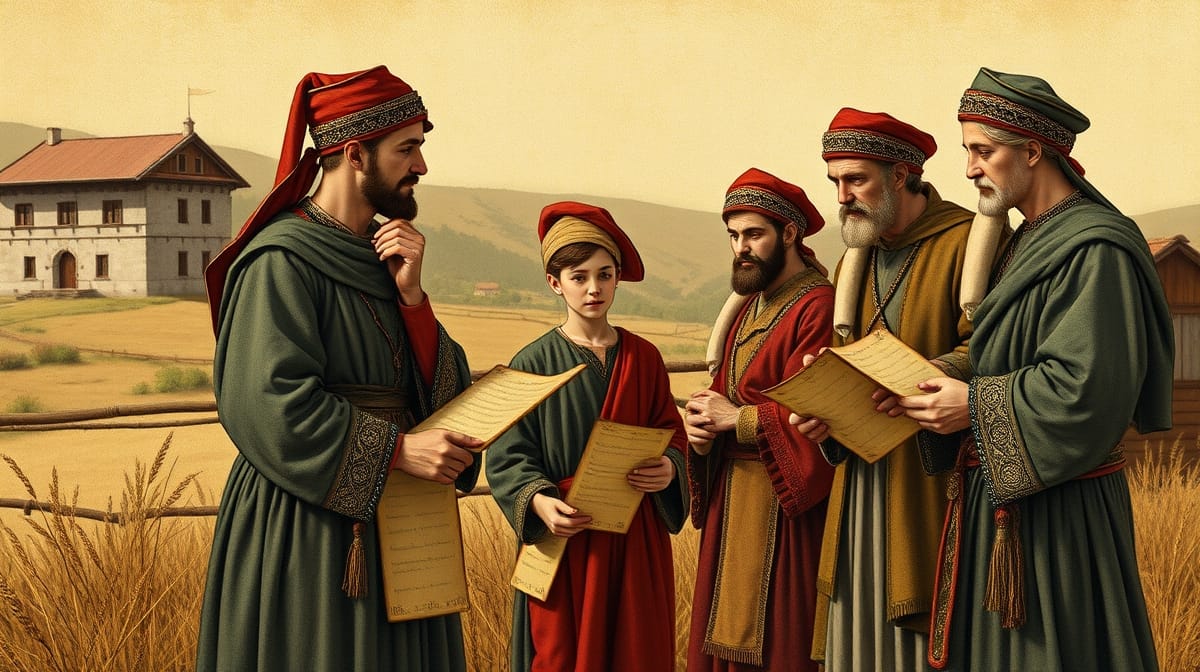
The Devshirme System was a centralized human-resource system through which the Ottoman state selected children from its non-Muslim subjects, especially in the Balkans, according to specific rules and trained them in the palace, the Enderun, and the kapıkulu corps for military and administrative service.
Contents
- What Was the Devshirme System?
- Historical Origins and Development
- How Were Children Selected in the Ottoman Empire?
- Education and Paths of Advancement
- Its Role in State Administration
- Criticisms, Limits, and Transformation
- Conclusion
- Sources
- Frequently Asked Questions
)
What Was the Devshirme System?
The Devshirme System was a distinctive institution that met the military and administrative needs of the Ottoman central state structure. The system was not merely a matter of collecting children; it involved a long process that included separating the selected children from their families, raising them in a Muslim-Turkish environment, educating them under palace discipline, and directing them into different branches of service according to their abilities.
In the Ottoman order, the kapıkulu soldiers and palace officials attached to the sultan were important elements that strengthened the central authority of the state in the classical period. This structure was based not on local power centers or noble families in the provinces, but on a concept of service tied directly to the sultan. For this reason, the Devshirme System was not only a military practice but also part of the philosophy of governance.
According to Halil İnalcık, in the Ottoman classical order, the kul system was one of the principal instruments that balanced the sultan’s authority both in the provinces and at the center. Within this framework, people of devshirme origin could, over time, become Janissaries, palace officials, sancak administrators, viziers, and even grand viziers. In theory, this advancement depended not on noble birth, but on education, ability, loyalty, and success in service.
What need did the Devshirme System address?
The Devshirme System addressed the Ottoman Empire’s need for a regular military force and a reliable central bureaucracy across its expanding territories. As the importance of the kapıkulu corps increased within the foundation](https://osmanlitarihi.tr/osmanli-ordusu-nasil-kuruldu-kimlerden-olusurdu/%22>foundation) and development of the Ottoman army, the need for well-trained human resources also grew.
In the classical age of the Ottoman Empire, devshirme was a functional mechanism of selection and training in terms of both military discipline and central administration.
Historical Origins and Development
Sources place different emphases on the exact beginning of the devshirme practice. The general view is that the system became institutionalized between the late 14th century and the 15th century. The foundations of the kapıkulu organization were laid during the reign of Murad I, while the palace and army structures became more regular during the reigns of Murad II and Mehmed II. The period](https://osmanlitarihi.tr/ii-murad-donemi-ve-varna-savasi/%22>period) of Murad II and the subsequent age of Mehmed the Conqueror were the periods in which these institutions matured.
At first, the practice of making use of prisoners of war was widespread. Over time, the continuity of conquests and the state’s growing need for personnel made a more orderly selection mechanism necessary. Thus, the practice of selecting children from villages and towns at regular intervals emerged. İsmail Hakkı Uzunçarşılı, in his study of the kapıkulu corps, emphasizes the close connection between this arrangement and the Janissary organization.
With the strengthening of the palace organization under Mehmed II, Enderun education also gained great importance. In this process, talented children of devshirme origin were trained not only as soldiers but also as candidates for statesmanship. Mehmed](https://osmanlitarihi.tr/fatih-sultan-mehmed-kimdir-istanbulun-fethi/%22>Mehmed) II’s centralizing policies increased the weight of officials of devshirme origin within the palace and state apparatus.
How Were Children Selected in the Ottoman Empire?
The devshirme method was not a random process of collection. According to the sources, officials assigned to specific regions would examine local records and family circumstances and select children deemed suitable. Criteria such as age, physical build, health, family situation, and ability were taken into account in these selections.
Selection was usually made from among boys between the ages of 8 and 18; in practice, however, the most suitable ages appear to have been pre-adolescence or early adolescence. Rules such as not taking children from families with only one child, exempting certain craftsmen or families of special status, and not selecting married boys are mentioned in the sources. It would not be accurate to say that the practice operated with the same severity or regularity in every region; period, region, and local conditions could vary.
)
What were the selection criteria of the Devshirme System?
Within the Devshirme System, the children to be selected were expected to be healthy, strong, intelligent, and suited to education. Those who were extremely young or old enough to be considered adults were generally not preferred. The family’s social situation was also important; rules such as not taking an only son were aimed both at protecting family production and at reducing social reaction.
- Age: Children were generally expected to be young and at an age suitable for education.
- Health: They were expected to be physically strong and sound.
- Family situation: It is stated that care was taken to protect families with only one child.
- Ability: Intelligence, willingness to learn, and adaptation to discipline were considered important.
- Regional balance: The aim was to avoid taking an excessive number of children from the same region.
Who was excluded from devshirme?
The devshirme practice was primarily directed at the non-Muslim subjects of the Ottoman Empire. Muslim children were not, as a rule, included in this system. The sources also contain information indicating that children were not taken from Jewish communities, certain urban groups, or families with special status. Nevertheless, the practice could change over time according to the needs of the state and regional circumstances.
The point to note here is that the Devshirme System was not a uniform and mechanical structure operating in exactly the same way in every period. There were significant differences between the regular practices of the 15th and 16th centuries and the loosening and deterioration seen in the 17th century.
Education and Paths of Advancement
The selected children were first placed with Muslim Turkish families in Anatolia. At this stage, the aim was for them to learn Turkish, become familiar with Islamic life, and grow accustomed to daily discipline. They were then directed, according to their abilities, either to the Acemi Ocağı or to more elite stages of palace education.
The Enderun was the most elite educational institution in this process. It provided not only military training but also instruction in manners, language, writing, administrative knowledge, palace protocol, sports, the arts, and religious learning. Within the Ottoman](https://osmanlitarihi.tr/osmanlida-egitim-sistemi-nasildi/%22>Ottoman) education system, the Enderun held a special place because it directly trained personnel for state service.
While some youths of devshirme origin entered military service as Janissaries, the talented advanced in palace service. These steps of advancement were based on strict discipline, supervision, and competition. Those who succeeded could, over time, rise to offices such as sancak bey, beylerbeyi, vizier, and grand vizier.
The relationship between the Enderun and the Devshirme System
The connection between the Devshirme System and the Enderun stood at the center of the formation of the Ottoman elite. The Enderun aimed to turn selected youths into educated and loyal statesmen close to the sultan. In this respect, the system did not merely produce military power; it also shaped a significant portion of the ruling class.
As emphasized in the writings of Mehmet İpşirli and the entries in the TDV Encyclopedia of Islam, Enderun education was one of the most distinctive institutions of the Ottoman palace organization. Many people trained there undertook influential duties in provincial and central administration. This situation shows that the relationship between social origin and administrative advancement in the Ottoman Empire developed along a line different from the hereditary aristocratic models of Europe.
Its Role in State Administration
The influence of people of devshirme origin in Ottoman state administration became especially evident in the 15th and 16th centuries. During this period, many grand viziers, viziers, commanders, and palace officials were of devshirme origin. Thus, the central bureaucracy was reshaped on the basis of loyalty to the sultan.
This structure strengthened the understanding of advancement through service rather than hereditary nobility in Ottoman administration. Of course, this does not mean that the system was entirely egalitarian. Palace discipline, loyalty to the sultan, conversion of religion, and strict hierarchy were fundamental elements. Yet when viewed within the imperial logic of the period, the fact that a child of provincial origin could rise to the highest offices of the state is a striking feature.
The Janissaries](https://osmanlitarihi.tr/yeniceriler-kimdir-ne-is-yaparlar/%22>Janissaries) represented the military wing of this structure, while administrators emerging from the Enderun strengthened its administrative wing. The timar system, meanwhile, maintained the sipahi force in the provinces. For this reason, the Timar](https://osmanlitarihi.tr/timar-sistemi-nedir-osmanlida-devleti-nasil-tasimistir/%22>Timar) System and the kapıkulu-devshirme structure were two separate but complementary elements of the Ottoman military and administrative balance.
)
Criticisms, Limits, and Transformation
Although the devshirme practice was historically a functional Ottoman institution, it has controversial aspects from a modern perspective. The separation of children from their families, the process of religious conversion, and their compulsory direction into state service are today assessed critically in terms of human rights and children’s rights. What matters for the historian is neither to romanticize the institution nor to judge it in a one-dimensional way.
In Ottoman sources, the system is often described through the lens of state order and the ideal of service. Modern historiography, however, considers both the needs of the state and the effects on society together. Caroline Finkel, in her assessment of the Ottoman classical age, draws attention to the role of central institutions in imperial administration. Suraiya Faroqhi shows that Ottoman society should be read not only through the palace and army, but also in the context of the provinces and everyday life.
From the 17th century onward, the Devshirme System began to lose its former regularity. Irregular outside entries into the Janissary Corps increased, and membership in the corps began to turn into an interest passed from father to son. This transformation occupied a central place in debates over the deterioration of the Ottoman military structure. In discussions of the period](https://osmanlitarihi.tr/osmanlida-duraklama-donemi-neden-basladi/%22>period) of stagnation in the Ottoman Empire, changes in the Janissary organization are frequently emphasized.
Why did the Devshirme System weaken?
The Devshirme System weakened especially as the structure of the kapıkulu corps changed. The spread of firearms, the transformation of the war economy, the increase in the number of salaried soldiers, and the breakdown of corps discipline were influential in this process. The Janissary Corps’ gradual emergence as an element of political pressure also reduced the sustainability of the old order.
This weakening did not happen all at once. Although the old methods partly continued in the 17th and 18th centuries, the logic of selection, training, and promotion that had characterized the system in the classical age gradually eroded. With the modernization efforts of the 19th century, the kapıkulu order withdrew from the stage of history. The abolition of the Janissary Corps in 1826 was one of the symbolic endpoints of this long transformation.
Conclusion
The Devshirme System was an important institution that linked military power, palace education, and central administration in the classical period of the Ottoman Empire. The selection of children according to specific rules, their education within a Turkish-Islamic environment, and their advancement according to ability made the system one of the fundamental parts of the Ottoman understanding of administration; however, because of aspects such as separation from the family and compulsory conversion, it remains a practice that must be evaluated critically in modern historiography.
Sources
- Halil İnalcık, The Ottoman Empire: The Classical Age.
- İsmail Hakkı Uzunçarşılı, Kapıkulu Corps in the Organization of the Ottoman State.
- Caroline Finkel, Osman’s Dream.
- Suraiya Faroqhi, Ottoman Culture and Daily Life.
- TDV Encyclopedia of Islam, entries on Devshirme and Enderun.